World: Earliest Extant Instruments
Hundreds of examples of broken pipes made from animal, bird or human bones, and pipes made from clay,
have been found world-wide.
Some of these
may have developed into the three-hole pipe as we know it today.
There is no
evidence as yet
that they were played
with any percussion instrument. These are random examples
of excavated early pipes.
Drums also have a long history.
|
|
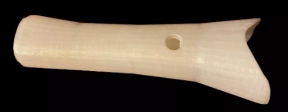
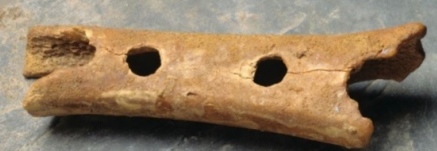
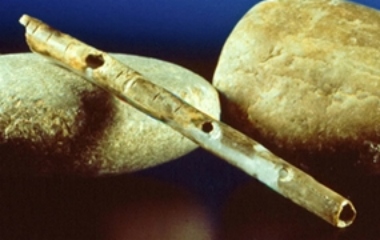 43,000 BCE Upper Paleolithic mammoth ivory, Hohle Fels, southern Germany 43,000 BCE Upper Paleolithic mammoth ivory, Hohle Fels, southern Germany |
|
|
|
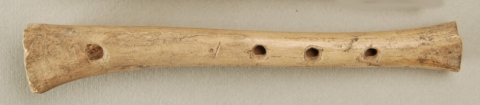
 25,000 BP Gravettian period, vulture bone (radius) 25,000 BP Gravettian period, vulture bone (radius) Isturitz cave, Basque country, Pyrénées-Atlantiques, France |
|
| 12,000 BP Eynan-Mallaha, Northern Israel.
7 pipes from bird wing bones, humerus, ulna and radius from the Eurasian teal and the Eurasian coot All the instruments have been used |
|
 7700 BP replica (possible) 7700 BP replica (possible) |
 7,700 BP bird bone,
Maritime Archaic burial site at L’Anse Amour, Newfoundland Island, Canada 7,700 BP bird bone,
Maritime Archaic burial site at L’Anse Amour, Newfoundland Island, Canada |
 12th or 11th century BCE swan (shin) bone Samtavro, Mtskheta, Georgia 12th or 11th century BCE swan (shin) bone Samtavro, Mtskheta, Georgia |
|
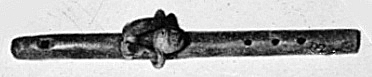 prehistoric Mexico prehistoric Mexico |
|
 prehistoric Mexico prehistoric Mexico |
|
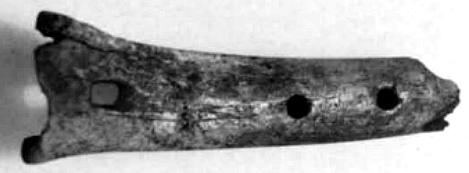 Stone/Bronze age transitional period, Vallby, Scania, Sweden Stone/Bronze age transitional period, Vallby, Scania, Sweden |
|
 3rd-4th century BCE China 3rd-4th century BCE China |
|
 300 BCE-300CE clay, western Mexico 300 BCE-300CE clay, western Mexico |
|
 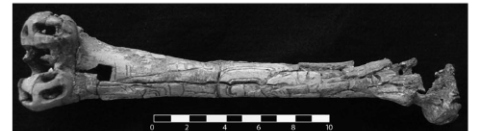 100-250 CE left femur of a white-tailed deer,Yugüe in Oaxaca, Mexico: hole on underside. 100-250 CE left femur of a white-tailed deer,Yugüe in Oaxaca, Mexico: hole on underside. The earliest example of a Mesoamerican bone flute. [Flutes played an important role in ceremonies because their music was capable of summoning divinities.] |
|
 2nd century A.D, Roman times,
Flavia Solva, Austria 2nd century A.D, Roman times,
Flavia Solva, Austria |
|
 6th century, Ukosa in Grad Stalać, Serbia 6th century, Ukosa in Grad Stalać, Serbia |
|
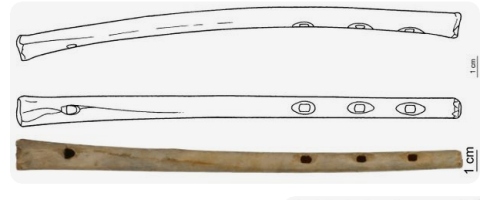 7th-9th centuries made of the right ulna of a whooper or a mute swan 7th-9th centuries made of the right ulna of a whooper or a mute swan Wijnaldum-Tjitsma, Netherlands |
|
|
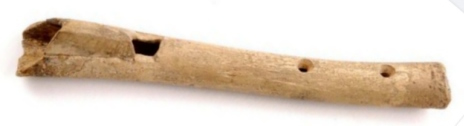 Anglo-Saxon 7th-8th century lamb tibia bone, Malham pipe, Yorkshire, England. Anglo-Saxon 7th-8th century lamb tibia bone, Malham pipe, Yorkshire, England.Tune played on this pipe here |
 reconstruction Clifford Street, York, England [fig 9b] reconstruction Clifford Street, York, England [fig 9b]Recreation played Made and Photo by Lucy-Anne Taylor |
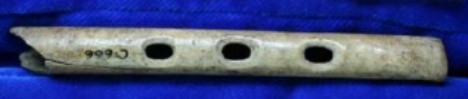 Anglo Scandinavian swan ulna pipe, Clifford Street, York, England Anglo Scandinavian swan ulna pipe, Clifford Street, York, England |
 replica c.950AD replica c.950AD |
 c.950 AD Haithabu swan bone flute, North Germany c.950 AD Haithabu swan bone flute, North Germany |
 reconstruction 11th century Poland reconstruction 11th century Poland |
 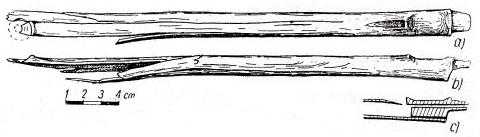 11th century Poland 11th century Poland |
 1008 onwards wood pipe, Colletiere, Paladru Lake, France 1008 onwards wood pipe, Colletiere, Paladru Lake, France |
|
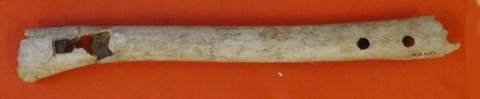 12th/13th century bone Abingdon, England 12th/13th century bone Abingdon, England |
|
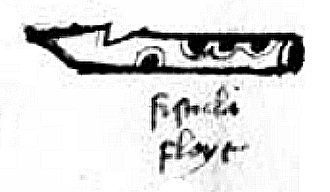 14th century Flemish copy of French drawing originally by Alan of Lille; ( c. 1128 – 1203) 14th century Flemish copy of French drawing originally by Alan of Lille; ( c. 1128 – 1203) |
|
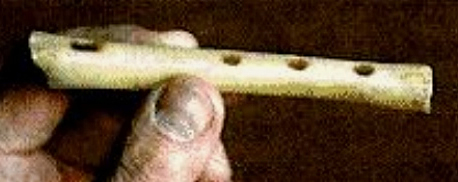 replica of early 13th century pipe Denmark replica of early 13th century pipe Denmark |
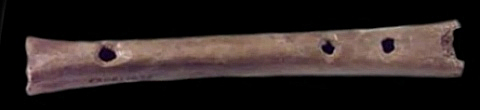 early 13th century sheep shin bone (tibia) one hole underneath; Åarhus, Denmark early 13th century sheep shin bone (tibia) one hole underneath; Åarhus, Denmark |
 medieval pipe made from goose ulna, Southgate Street, Gloucester, England [number 25] medieval pipe made from goose ulna, Southgate Street, Gloucester, England [number 25] |
|
 after c1200 crane lower leg, Lady Wooton’s Green, Canterbury, England after c1200 crane lower leg, Lady Wooton’s Green, Canterbury, England |
|
 1200-1232 sheep or goat bone,
Trichay Street, Exeter, England 1200-1232 sheep or goat bone,
Trichay Street, Exeter, England |
|
|
|
 13th century (?) sheep tibia, excavated from a moat round a monastery in Deventer 13th century (?) sheep tibia, excavated from a moat round a monastery in Deventerthe Netherlands. The (shrunken) wooden block is still in place. Photo by the authors/Provincial Depot A. Verlinde, Deventer. |
|
 3rd-15th century sheep tibia, Neuss, Germany 3rd-15th century sheep tibia, Neuss, Germany |
|
 [no details] Gottorf Castle, Schleswig-Holstein Germany [no details] Gottorf Castle, Schleswig-Holstein Germany |
|
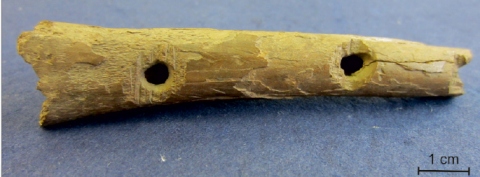 medieval sheep shin bone, Turku, Finland medieval sheep shin bone, Turku, Finland (town was founded at the turn of the 13th and 14th centuries) |
|
| "With drums and flageolets similar to fifes, of which they have many, they escorted their visitors into the pueblo.” |  Around 1000 AD bird bone pipes, Pecos region of West Texas and just south Around 1000 AD bird bone pipes, Pecos region of West Texas and just south of New Mexico's border; abandoned pueblo, San Miguel, New Mexico |
 pre-Columbian abandoned pueblo called
Po-shu-ouinge, Chama Valley, New Mexico pre-Columbian abandoned pueblo called
Po-shu-ouinge, Chama Valley, New Mexico |
|
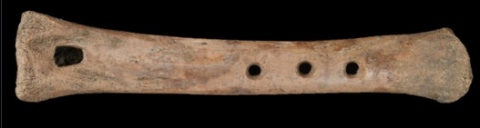 medieval pig tibia, Cambridgeshire, England medieval pig tibia, Cambridgeshire, England |
|
 13th-16th century sheep or goat tibia bone,
The castle of Teutonic Order in Viljandi, Estonia 13th-16th century sheep or goat tibia bone,
The castle of Teutonic Order in Viljandi, Estonia LIETUVOS ARCHEOLOGIJA. 2012. T. 38, p. 295–338. page 317, fig 19 |
|
| 16th century Valladolid,
Castile and León, Spain : "There were also little flutes made from the bones of the cranes, from which they took the name of tibiae, because the fifes that are played together with the drums of war are made today of cane or leg bones of these birds “ ‘The Network of Musicians in Valladolid, 1550–1650: Training, Companies, Livelihoods |
|
modern bone pipes |
|
 19th century bone, Costa Rica 19th century bone, Costa Rica |
|
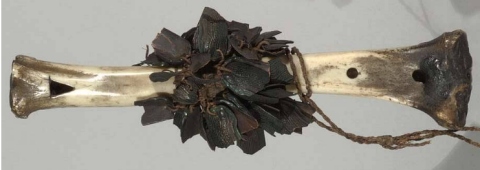 bone 3-hole pipe from the Amazon, date not known; ornamented with beetle wings bone 3-hole pipe from the Amazon, date not known; ornamented with beetle wings |
|
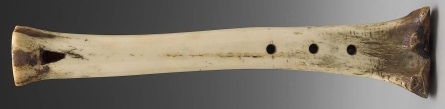 1900-1950 bone, Tukano people, northwestern portion of Brazil, southeastern portion of Colombia 1900-1950 bone, Tukano people, northwestern portion of Brazil, southeastern portion of Colombia |
|
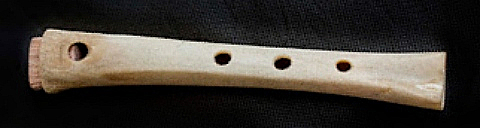 2013 bone pingullo,
Ecuador made by Luis Alberto Gonzáles, used with a drum 2013 bone pingullo,
Ecuador made by Luis Alberto Gonzáles, used with a drum |
|
Jemez Pueblo makes eagle bone whistles and pipes How to make a three-hole bone pipe here |
|
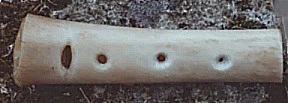 reindeer bone pipe 21st century reindeer bone pipe 21st century |
|
| Yuri Terenyi says: Bird bones are reasonably straight-bored, and long, so overblowing produces notes very well in tune with each other. Sheep, goat and deer bone pipes, that have been found by the hundreds, do not overblow in any musical sense. 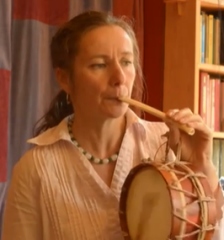 Aahmes Quince playing a bird bone three-hole pipe Aahmes Quince playing a bird bone three-hole pipefrom a mollymawk, a kind of albatross. Washed up on the beach in New Zealand. Made by Yuri Terenyi |
|
early wood pipes |
|
 15th century wood pipe, Novgorod, Russia 15th century wood pipe, Novgorod, Russia |
|
 Russia wood Russia wood |
|
 15th century wood, Lengberg Castle, East Tyrol, Austria 15th century wood, Lengberg Castle, East Tyrol, Austria |
|
 1475-1525 wood, Rotterdam 1475-1525 wood, Rotterdam |
|
 15th century Oxford England, double pipes 15th century Oxford England, double pipes |
|
 1515 drawing, Italy 1515 drawing, Italy |
|
earliest drum |
|
 |
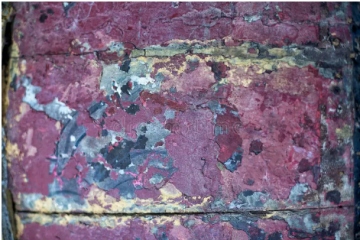 |
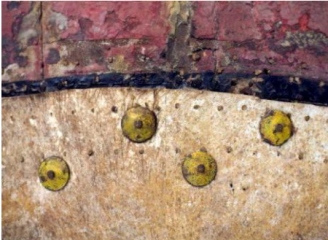
30,000 BCE elephant skin drum preserved from scavenging as it was buried in ice in Antarctica’s ice age. There is no evidence that it was used with a pipe. Other drums from natural objects such as alligator skin appeared during 5500 BC
in Neolithic cultures |
|
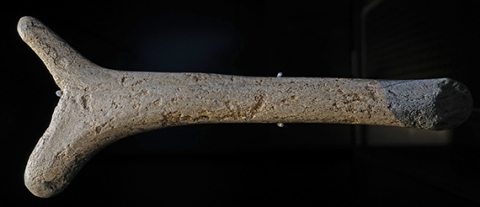 12,000 BP drumstick
made from Reindeer antler 12,000 BP drumstick
made from Reindeer antler
found at Brillenhöhle, Blaubeuren-Seissen, Alb-Donau-Kreis, south-western Germany |
|
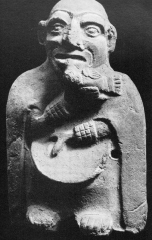 Maya
vessel flute made in a mould Maya
vessel flute made in a mould
[Ed. Is this an antler or the man's hand?] "The man is blowing a bird-shaped vessel placed on his chin. He blows into a hole in the bird's head. |
|
human bone musical instruments |
|
In the National Museum of Anthropology and the Frissell collection, Mexico, there are flutes of bones from Oaxaca ‘Music in transformation: musical instruments of the 16th century in the Vocabulary of Juan de Córdova (1578) and its comparison with that |
|
1568 human bone pipes: ‘The new found worlde, or Antarctike : wherein is contained wo[n]derful and strange things, as well of humaine creatures, |
|
1300-1520 AD In central and west Mexico drumsticks were fashioned from the bones of recently 'The missing femur at the Mitla Fortress and its implications' Antiquity / Volume 84 / Issue 326 / December 2010 |
|
"In one of the few surviving prehispanic Mayan theatrical plays, the Rabinal Achi, the leader of one of two feuding cities, |
|
| Interesting articles on reconstruction of the earliest bone flutes here | |
The Earliest Tabor Pipes, by Yuri |
|
additions and modifications by experts in this field |
|
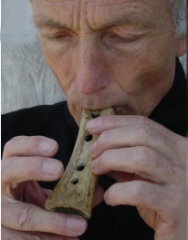






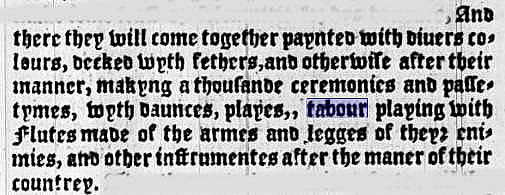 “And they will gather together painted with various colours decorated with feathers

top of page