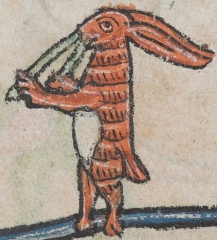
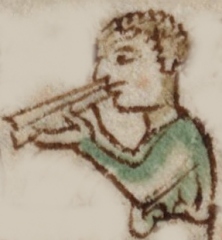
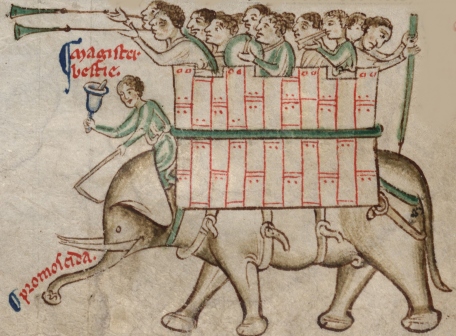
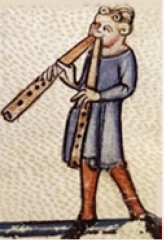
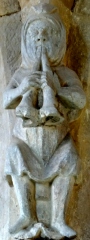
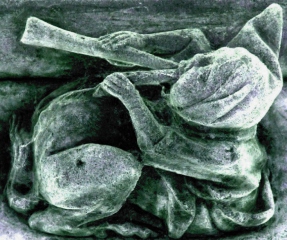
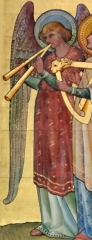
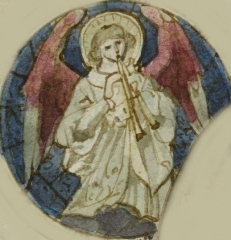
Double pipes, or two pipes played at the same time, are found in sculptures, paintings, stained glass, religious manuscripts and archaeology dating back into pre-history, right up to the present day. Sometimes the two pipes are exactly the same; other images show two slightly different shapes, one playing the tune and the other a drone pipe.
It is impossible to see the mouth-piece on some of these images: some may be duct flutes, others may have single or double reeds or be trumpets. If you have information on the mouth-piece of any of these instruments I would be grateful to know.
I have not included images where it is definately not a variety of duct-flute without keys. Around 1810 an English instrument maker, William Bainbridge, patented a keyed double flageolet which consisted of two English flageolets joined together so that the player could harmonise the tunes that s/he played. Flageolets are therefore not included here.
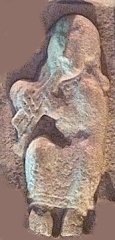 10th century Clonmacnoise, Ireland 10th century Clonmacnoise, Ireland
forerunner of the bagpipe? |
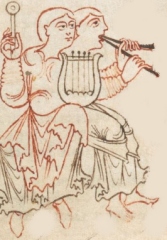 10th century England 10th century England |
10th century Irish text describing a legend:
A man called Mac Díchoíme made a double pipe
(cuislenn dégabail) from three saplings.
[Ed. This may have been a reed pipe]
‘Flutes, pipes, or bagpipes? Observations on the terminology
of woodwind instruments in Old and Middle Irish’
by Bisagni, Jacopo, 2015, page 24 |
|
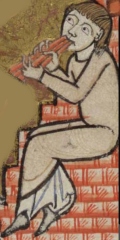 1170 England 1170 England |
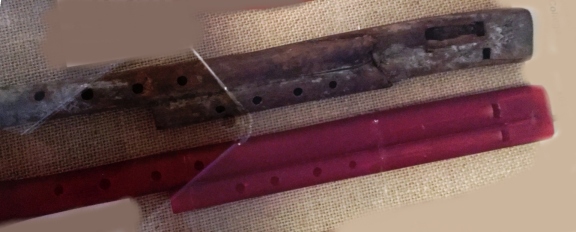 late medieval double pipes in Pitt Rivers Museum, Oxford late medieval double pipes in Pitt Rivers Museum, Oxford
|
|
|
| |
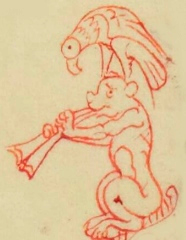
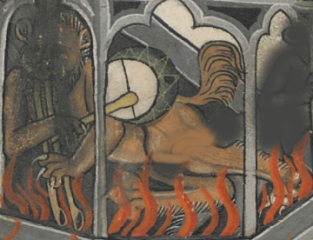 1301-1350 devil, Salisbury 1301-1350 devil, Salisbury |
|
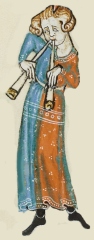
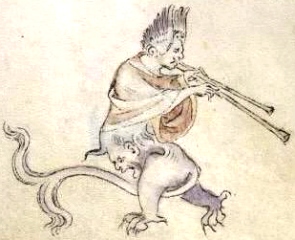 1310-20 Westminster, London 193v 1310-20 Westminster, London 193v |
|
|
|
|
|
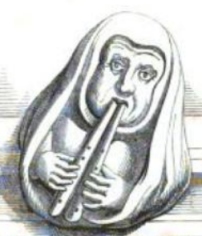
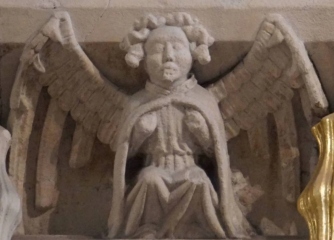
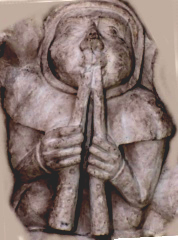 14th century keystone, Winchester Cathedral 14th century keystone, Winchester Cathedral |
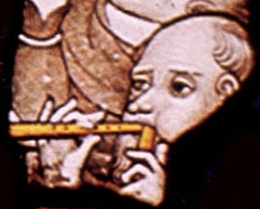
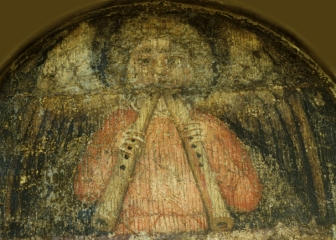 1375-1404 Westminster Abbey wall painting 1375-1404 Westminster Abbey wall painting |
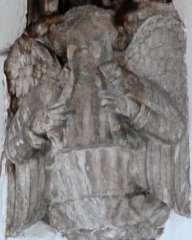 1380 Fitzalan Chapel, Arundel Castle 1380 Fitzalan Chapel, Arundel Castle
West Sussex |
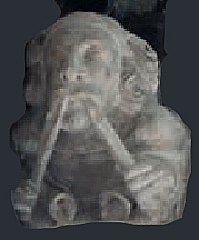 c.1340 corbel depicting a man playing pipes c.1340 corbel depicting a man playing pipes
with pellet bells, St Mary’s, Cogges, Oxfordshire
‘Musical Wit and Courtly Connections at Cogges’ by Laura Slater |
|
|
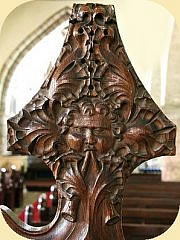
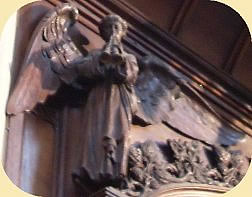
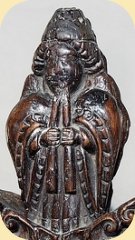 All Saints Church, Chevening, Suffolk, pew end All Saints Church, Chevening, Suffolk, pew end |
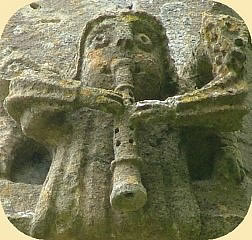 15th c. Elkestone Church Gloucestershire 15th c. Elkestone Church Gloucestershire |
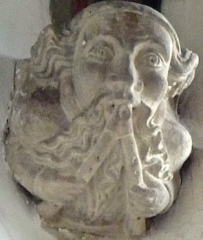 1451 Stamford, Lincolnshire 1451 Stamford, Lincolnshire |
|
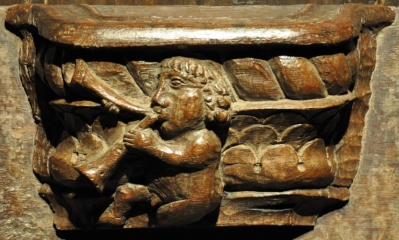 c.1470 Scotland, chair misericord, double pipes or horns c.1470 Scotland, chair misericord, double pipes or horns |
|
|
 15th century Oxford extant double pipes 15th century Oxford extant double pipes |
|
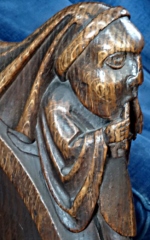 |
|
|
Late 15th century Southwold,
Suffolk
carved wood church
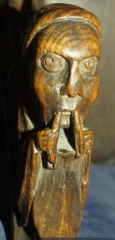
benchend
[Ed. the official note says he is pulling his teeth out] |
|
| |
| |
|
|
|
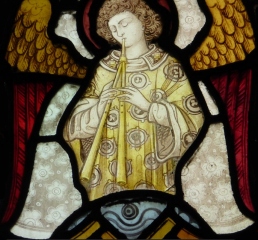 1874 Bournemouth, Dorset 1874 Bournemouth, Dorset |
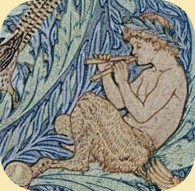 1880-1915 wallpaper 1880-1915 wallpaper |
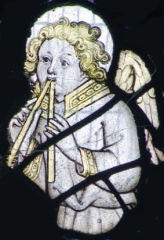
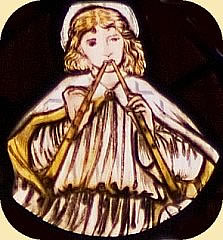 All Saints, stained glass, Cambridgshire All Saints, stained glass, Cambridgshire |
|
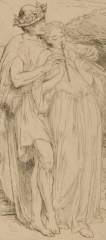 drawing by Frederic drawing by Frederic
Lord Leighton |
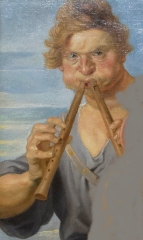
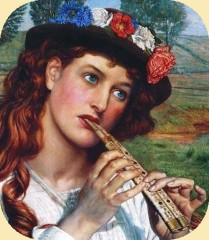 1884 painting 1884 painting |
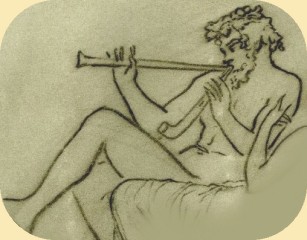 19th c drawing c British Museum 19th c drawing c British Museum |
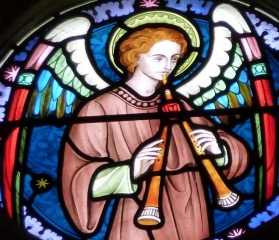
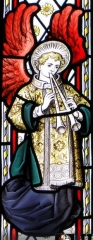 1890 stained glass, 1890 stained glass,
Henley-on-Thames
Oxfordshire |
|
|
|
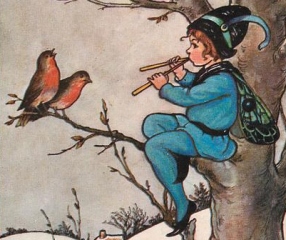 1914 postcard 1914 postcard |
|
|
|
|
 |
|
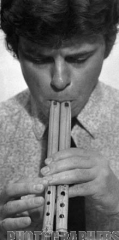 20th century David Munrow 20th century David Munrow |
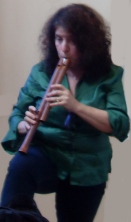 21st century Avery 21st century Avery
at Taborers Society
symposium |
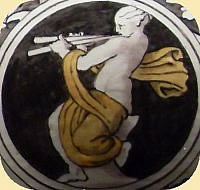
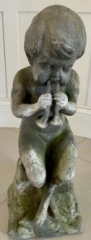
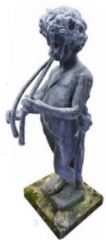
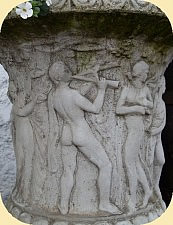 21st century classical flowerpot on pedestal
Surrey 21st century classical flowerpot on pedestal
Surrey |
|
| |
|
|
| |
 unknown unknown |
|
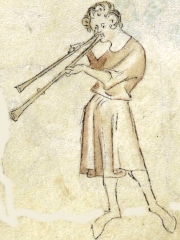 1310-20 Westminster, London 126r
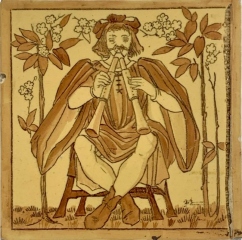
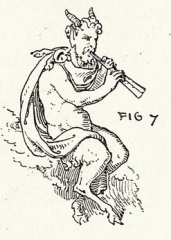 1894 London, design book illustration
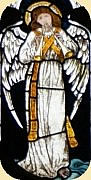
 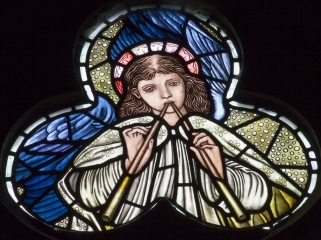 early 21st century stained glass,
All Saints, Widen, Worcestershire
early 21st century stained glass,
All Saints, Widen, Worcestershire
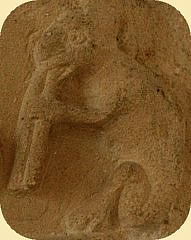
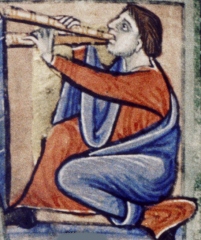
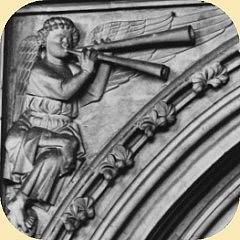
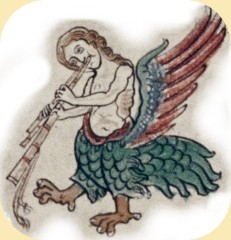


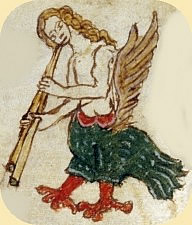
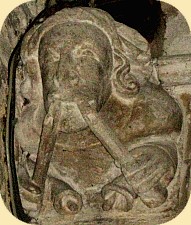
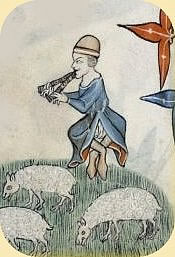
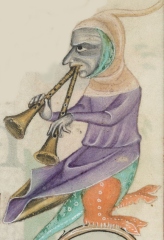

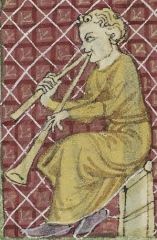
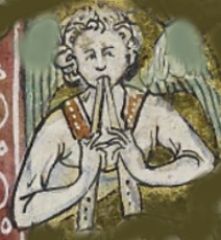

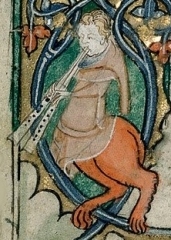
 1340 stone carving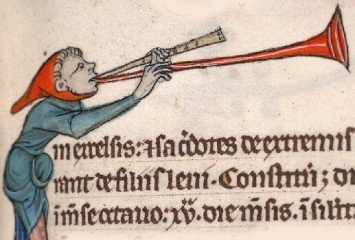
 early 14th century Heckington,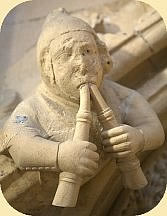
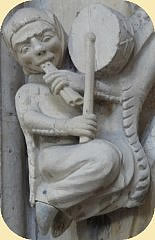
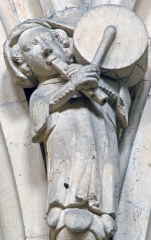
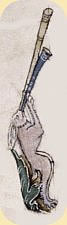
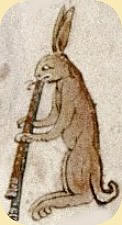
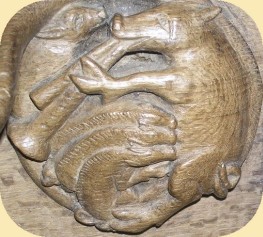 14th century Winchester Cathedral
 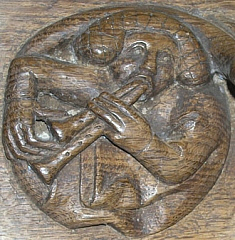 14th century Winchester Cathedral
 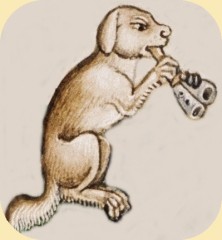 1495
1495






 source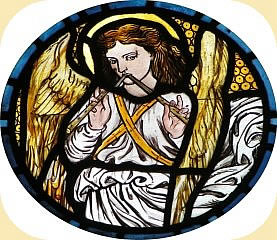




.jpg)