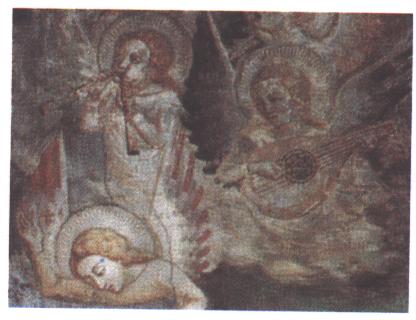
Double pipes, or two pipes played at the same time, are found in sculptures, paintings, stained glass, religious manuscripts and archaeology dating back into pre-history, right up to the present day. Sometimes the two pipes are exactly the same; other images show two slightly different shapes, one playing the tune and the other a drone pipe.
It is impossible to see the mouth-piece on some of these images: some may be duct flutes, others may have single or double reeds or be trumpets. If you have information on the mouth-piece of any of these instruments I would be grateful to know.
I have not included images where it is definately not a variety of duct-flute without keys. Around 1810 an English instrument maker, William Bainbridge, patented a keyed double flageolet which consisted of two English flageolets joined together so that the player could harmonise the tunes that s/he played. Flageolets are therefore not included here.
Arabic countries |
|
|
|
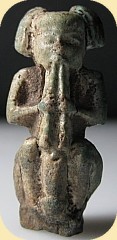
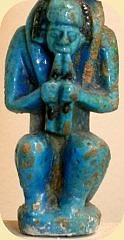 945-525BC statuette Egypt 945-525BC statuette Egypt |
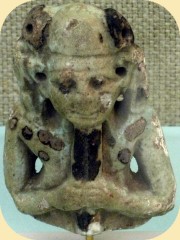 945-525BC statuette Egypt 945-525BC statuette Egypt |
|
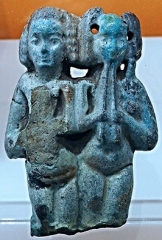
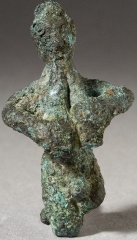 711 BCE - 100CE Egypt 711 BCE - 100CE Egypt |
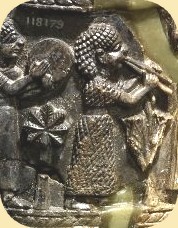 900-700BCE box, Lebanon 900-700BCE box, Lebanon |
|
|
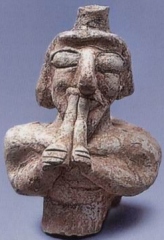
 God Bes, Egypt, copy God Bes, Egypt, copy |
|
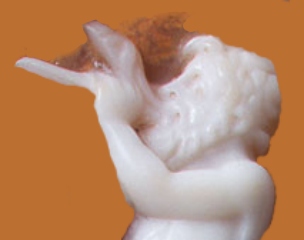 1st century BCE cameo, Alexandria, Egypt 1st century BCE cameo, Alexandria, Egypt |
|
|
|
|
| |
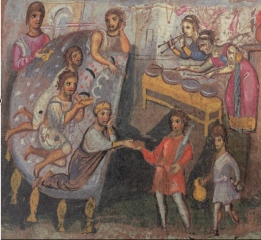 |
 |
6th century
manuscript Antioch, Syria, ‘Vienna Genesis’ |
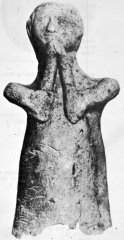
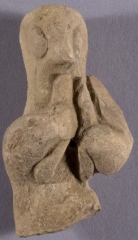 2500? terracotta, Ur, Iraq 2500? terracotta, Ur, Iraq |
|
 200AD south Iraq 200AD south Iraq |
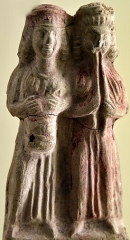 3rdc BCE to 2ndc CE Iraq 3rdc BCE to 2ndc CE Iraq |
|
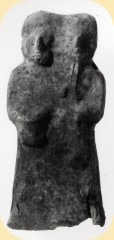 150 BCE Iraq 150 BCE Iraq
(with drum) |
|
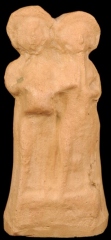 1st Millennium Iraq 1st Millennium Iraq
(cast) |
|
|
|
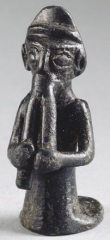 2nd century BCE - 3rd century AD, bronze,
Masjid-i-Soleiman, Iran 2nd century BCE - 3rd century AD, bronze,
Masjid-i-Soleiman, Iran |
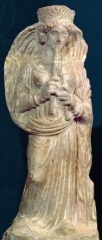 4th century BCE Tunisia 4th century BCE Tunisia |
|
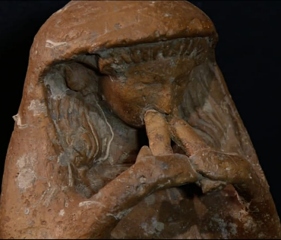 c.500BCE terracotta found in a ship that sank 2500 years ago c.500BCE terracotta found in a ship that sank 2500 years ago
which was transporting figures from Tyre, Lebanon |
|
|
|
| |
Israel |
|
|
| |
Russian Federation |
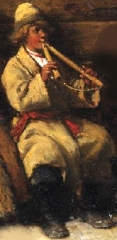 1885 painting detail, Russia 1885 painting detail, Russia |
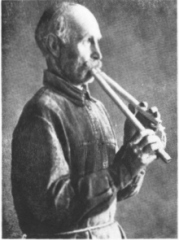
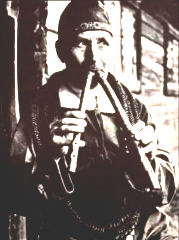
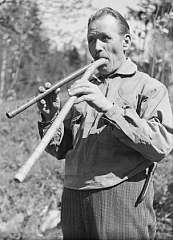
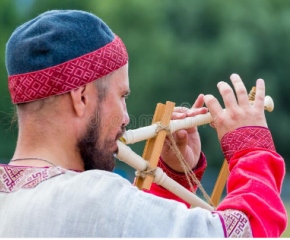
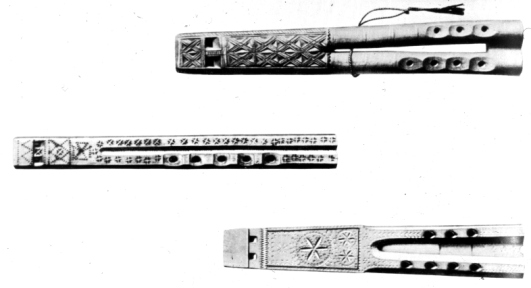
Double svirel has two similar pipes of different lengths.
Each
of the pipes has a whistle and three finger-holes.
Size of
the double svirel varies on a great scale.
The bigger pipe
can be 29 to 47 cm long,
and the smaller 22 to 35 cm. The
big pipe is usually
held in the right hand and the small
one in the left hand.
Bringing together two pipes into one instrument makes
it possible for one player to perform two-voice melodies.
The repertoire of double svirel tunes is quite extensive
and versatile. Double svirel was unevenly spread in Russia. |
 Svirel, Russia Svirel, Russia |
|
1775 Sept 12th St Petersburg, letter to newspaper from Dr Matthew Guthrie 'Anecdotes of Music' regarding
Russian Musical instruments, talking of double pipes, each with 3 holes: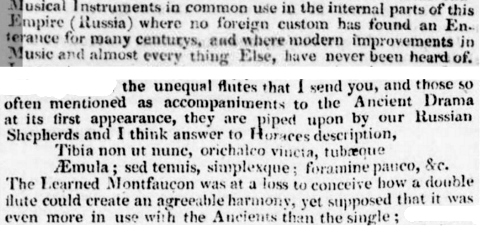 “...good samples of the flute, whilst in its rude unimproved state, with only three holes. I shall make one observation “...good samples of the flute, whilst in its rude unimproved state, with only three holes. I shall make one observation
more upon them, that I think they are not unlike the unequal flutes in the mouth of Francisco Ficaroni's female
minstrel, whom you have given us a plate of; and those she is playing on seem, by the application of her fingers,
to have also but three holes.” Bristol Mercury - Monday 11 December 1820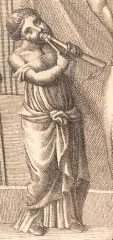 Francisco Ficaroni's female
minstrel (?) Francisco Ficaroni's female
minstrel (?) |
|
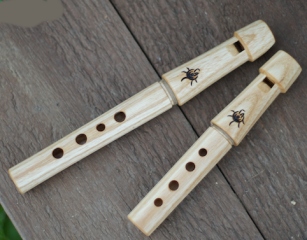 double pipes double pipes
|
 double pipes being played double pipes being played
|
 1913 painting 'Human-Ancestors' by Nicholas Roerich (detail) 1913 painting 'Human-Ancestors' by Nicholas Roerich (detail) |
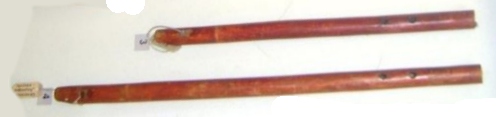 20th century, in Ethnological Museum, St Petersburg 20th century, in Ethnological Museum, St Petersburg |
|
| |
Ukraine |
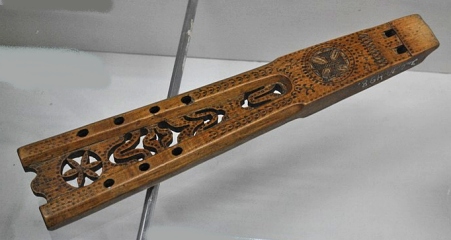 19th century Sopilka "Dvodentsivka" from the Verkhovyna district 19th century Sopilka "Dvodentsivka" from the Verkhovyna district |
|
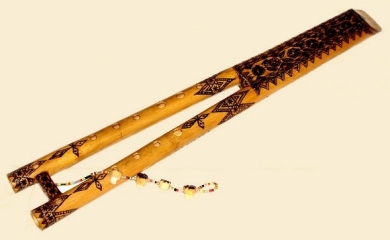 Urych village (Lviv region) Urych village (Lviv region) |
Two sopilka / dentsivkas are combined into one instrument but still only one has playing
holes.
The other pipe, although it is of
the same
length,
has no holes and acts
as a drone. |
|
|
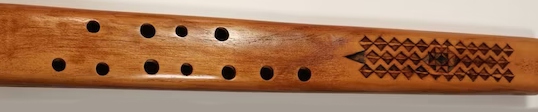 Dvodentsivka Dvodentsivka |
|
 |
|
|
|
|
|
|
|
|
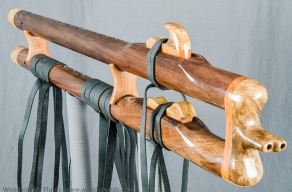 double double |
|
|
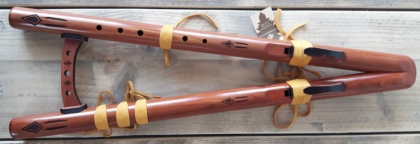
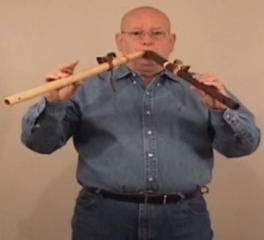
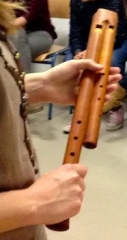
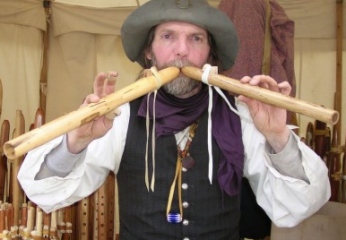
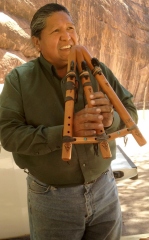
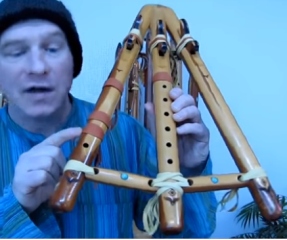
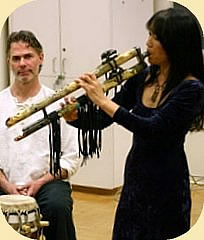 double Native American double Native American
|
|
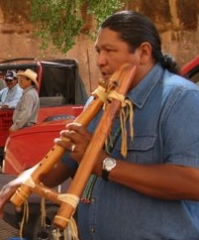 List of Native American flute makers worldwide List of Native American flute makers worldwide |
|
|
| |
|
| South and Central America |
|
Mexico |
|
| |
|
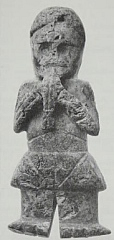
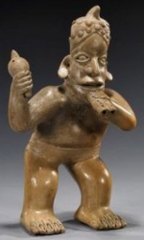
 300BCE - 1250AD Jaina 300BCE - 1250AD Jaina |
Jaina, off the coast of the Yucatán Peninsula, Mexico, is an artifical island used as a burial site for persons of the Mayan elite.
Mayan artisans expressed their creativity through detailed sculptures, pottery,
and jewellery, which were often buried alongside the deceased.
‘The Musical Instruments of the Jalapa Del Marques Valley’ by Gonzalo Sánchez Santiago |
|
|
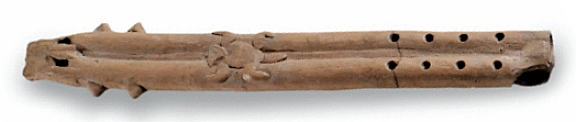
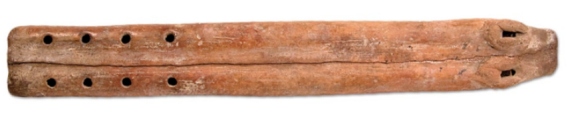
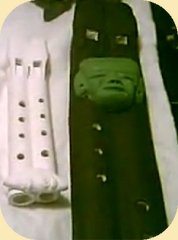
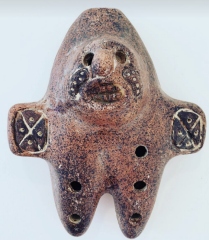
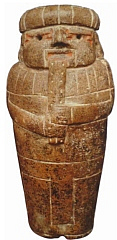
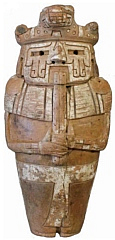
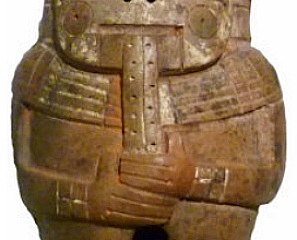
During the Late Postclassic period (1200-1521 AD) tubular-conical chamber flutes with four finger holes
were common in various areas of Mesoamerica, especially in the central highlands and the Mixteca region, Oaxaca.
Double flutes almost always are decorated with the image of a lizard or a snake.
‘The pre-Hispanic musical instruments of the Amparo Museum Collection’, by Gonzalo Sánchez Santiago, 2021 |
|
|
|
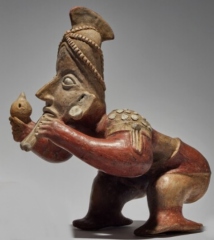
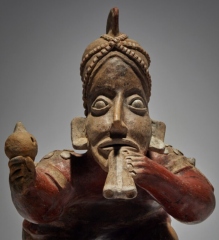
 300BCE to 300AD pre Colombian West Mexico front 300BCE to 300AD pre Colombian West Mexico front |
|
 300BCE to 300AD pre Colombian West Mexico back 300BCE to 300AD pre Colombian West Mexico back |
|
|
|
 300 BCE - 250 CE back,
Colima 300 BCE - 250 CE back,
Colima |
|
|
|
|
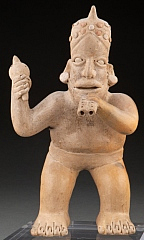
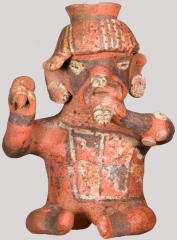
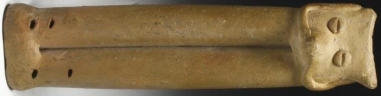 200BCE to200BC Pre-Columbian, West Mexico front 200BCE to200BC Pre-Columbian, West Mexico front |
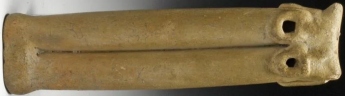 200BCE to200BC Pre-Columbian, West Mexico back 200BCE to200BC Pre-Columbian, West Mexico back |
|
|
| |
Peru |
1800–200 B.C.E examples of ceramic figurines, Formative Period, Tembladera, Cajamarca, north Peru.
The culture continued
to flourish until European contact in the 16th century. |
|
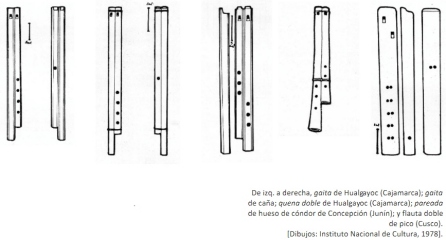 double pipes from Peru double pipes from Peru |
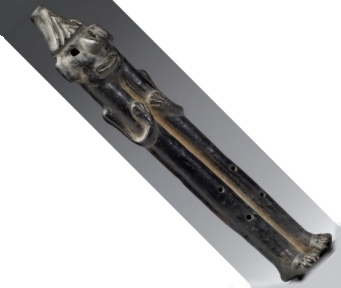 Jalisco style human effigy flute, unknown date Jalisco style human effigy flute, unknown date |
|
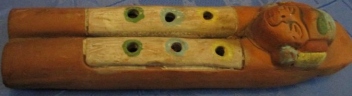 Aztec 20th century, made for tourists, front Aztec 20th century, made for tourists, front
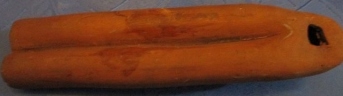 Aztec 20th century, made for tourists, back Aztec 20th century, made for tourists, back
|
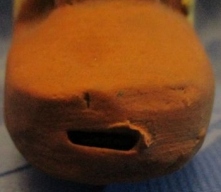 Aztec 20th century, made for tourists, mouthpiece Aztec 20th century, made for tourists, mouthpiece |
|
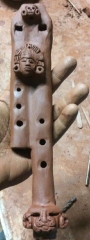 clay double pipes currently being made:
copies of archeological finds clay double pipes currently being made:
copies of archeological finds
by Arte Talli |
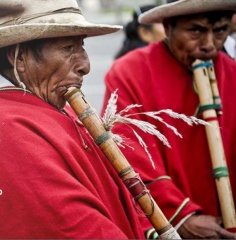 players of bamboo double pipes players of bamboo double pipes |
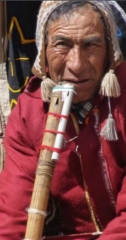 Peru Peru |
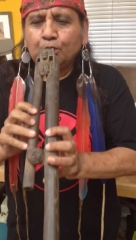 Mayan Mayan |
|
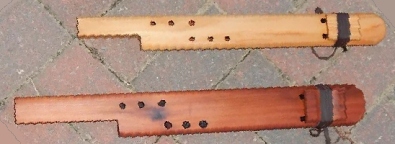 in F# in F# |
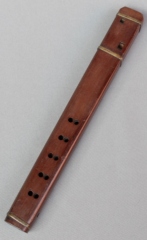 Cusco double pipes Cusco double pipes |
 double pipes from Cuzco, Peru double pipes from Cuzco, Peru |
|
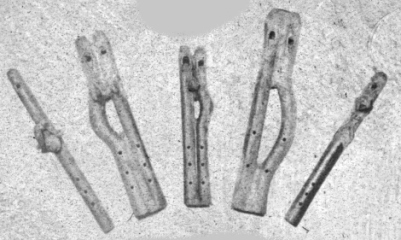
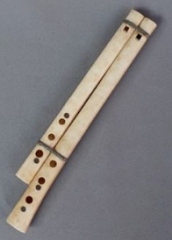
double bone flute from the north
of Peru; part of a tradition
of double dulzainas and pinkillos (especially cane and wood) that extends through
the Andes from Ecuador to Lake Titicaca.
Corrected and plugged fingering holes |
|
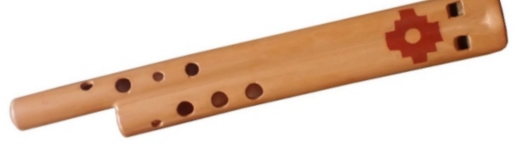 Cajamarca, Peru reproduction Cajamarca, Peru reproduction |
 |
|
|
central America |
|
|
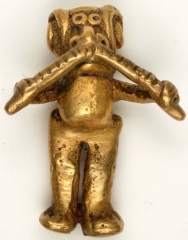
 700-1500 gold pendant, Costa Rica. snakes? 700-1500 gold pendant, Costa Rica. snakes?
" Ritual self-sacrifice through bloodletting
from the soft parts of the body" |
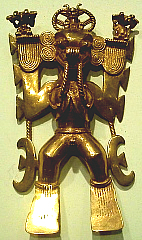 pre-Colombian Costa Rica pre-Colombian Costa Rica |
|
|
|
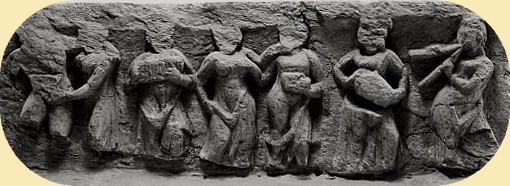 2nd-3rd century NW Frontier, Pakistan 2nd-3rd century NW Frontier, Pakistan |
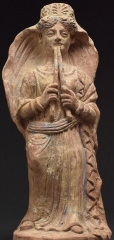 100-300AD goddess, Gandharan 100-300AD goddess, Gandharan
north-west Pakistan and north-east Afghanistan |
|
 |
 |
|
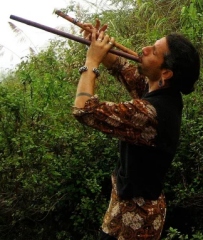
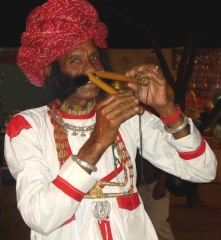
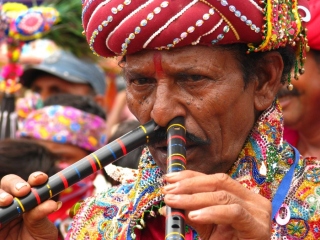
| 21st century Algoza (double flute of Rajasthan), video duet |
|
“two whistle flutes and many variations of these flutes and many many kinds of tunings. They are used for calling rain,
for thanking
the rain, for various ceremonies,
for ancestor and trance work,
and for singing poetry” |
|
|
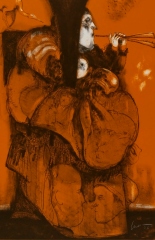
 2015 graphic by Svetlana Dorosheva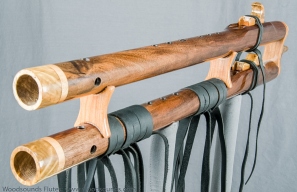
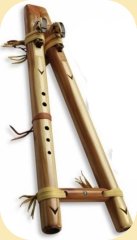 double Native American






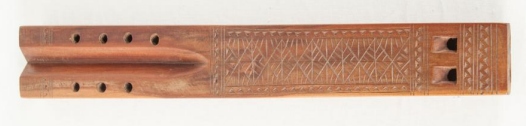
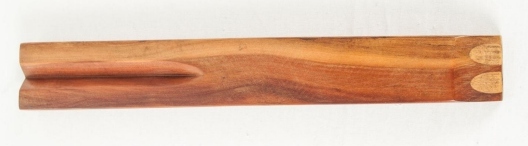
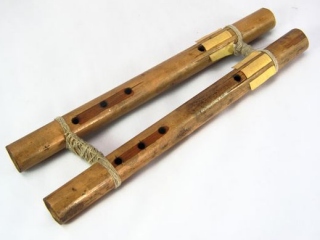
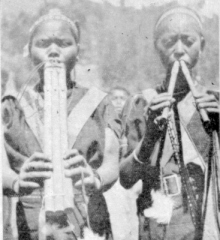


















 unknown




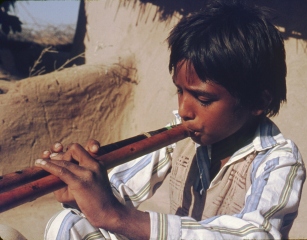
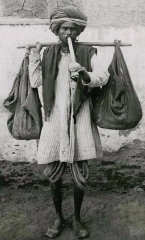
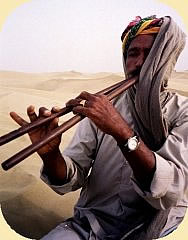
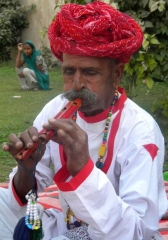



.jpg)




.JPG)


 19th century duct pipes
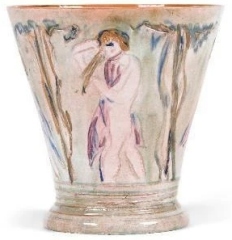 1949 ceramic