Europe by country
Portugal
with thanks to Gwilym for his research
|
One of the earliest depictions of the pipe and tabor in the 13th century. 420 poems with musical notation,
|
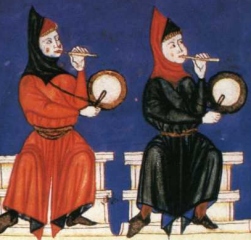
Portuguese historical and iconographic sources show us, since the Middle Ages, the presence of the drummer |
||
The 3-holed pipe played in north-east part of Portugal, Miranda do Douro, is generally called the pastoral flute, The situations when the pipe and tabor can be seen today are firstly on religious occasions. There are specific tunes |
||
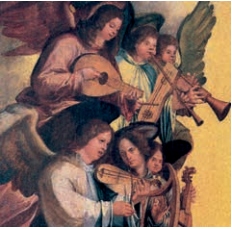
King Edward I (1391 –1438) had many musicians including: 'Musical iconography in fifteenth-century altarpiece and mural painting: Álvaro Pires de Évora, Bernardo Martorell and the unknown |
||
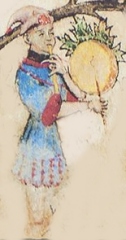 1344 Lisbon 1344 Lisbon |
||
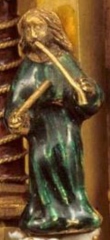 1506 religious item 1506 religious item |
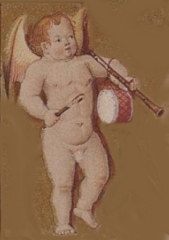 16th century manuscript 16th century manuscript |
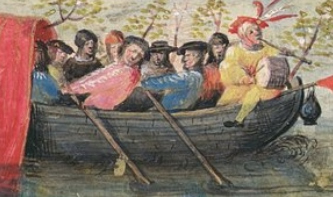 1517-38 April, from 'Book of Hours of Dom Manuel' 1517-38 April, from 'Book of Hours of Dom Manuel' |
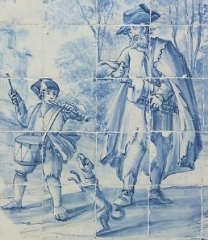 18th century, Monastery of São Vicente de Fora, Lisbon 18th century, Monastery of São Vicente de Fora, Lisbon |
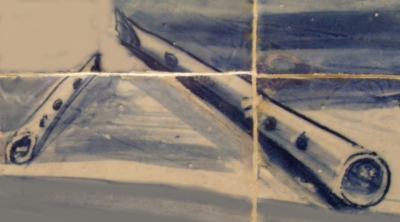 1760 tile panel depicting Apollo and Marsyas, garden fountain, Lisbon (detail) 1760 tile panel depicting Apollo and Marsyas, garden fountain, Lisbon (detail) |
|
|
||
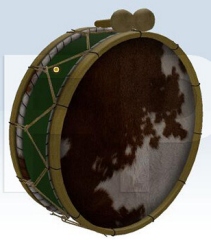 traditional drum -
Bombo de Lavacolhos traditional drum -
Bombo de Lavacolhos |
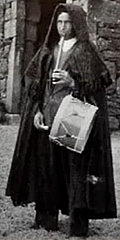 flauta o gaita played by flauta o gaita played bya tamborileiro from Trás-os-Montes e Alto Douro, and Alentejo |
|
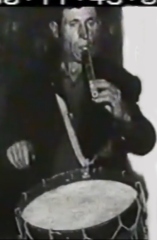 unknown unknown |
||
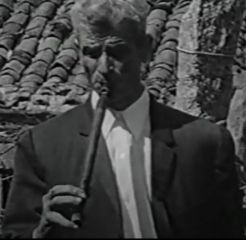 unknown pipe player unknown pipe player |
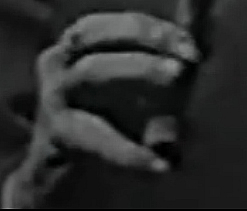 pipe held by little finger at end pipe held by little finger at end |
|
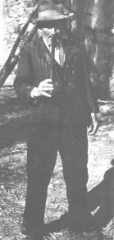 Manuol Einácio in the 20th century. Manuol Einácio in the 20th century. |
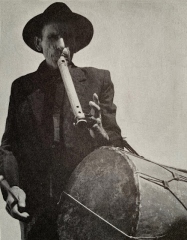 20th century 20th century |
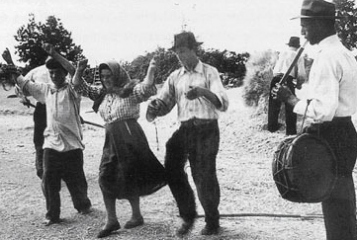 20th century Virgílio Augusto Cristal playing for dancing 20th century Virgílio Augusto Cristal playing for dancing |

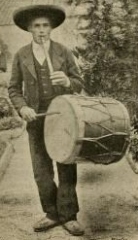
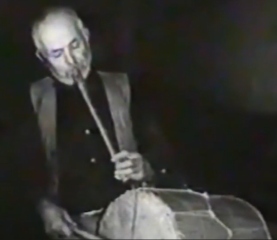
|
||||||||||||||||||||
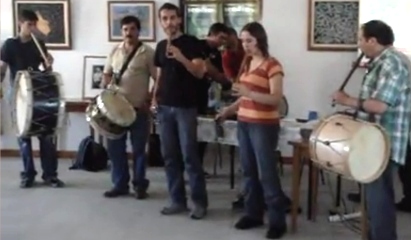 music workshop music workshop |
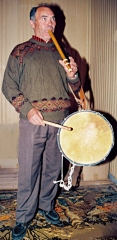 Angelo Arribas, Angelo Arribas, Freixiosa, Miranda do Douro |
|||||||||||||||||||
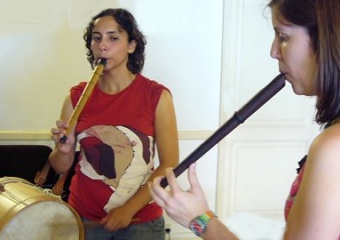 21st century women students at the music school in Lisbon 21st century women students at the music school in Lisbon |
||||||||||||||||||||
 2024 duo 'Pardeus' 2024 duo 'Pardeus' |
||||||||||||||||||||
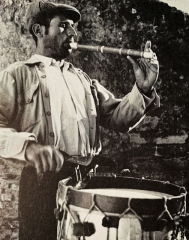
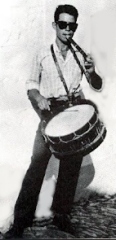
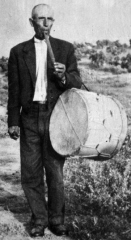
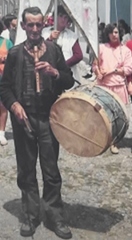

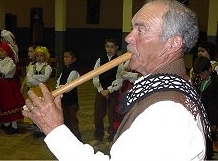
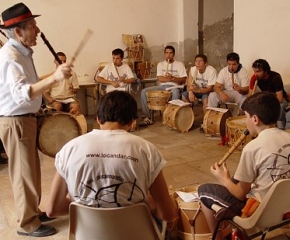
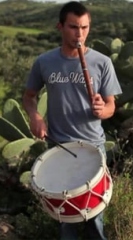
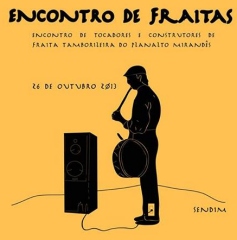
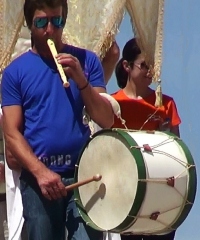
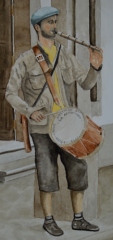
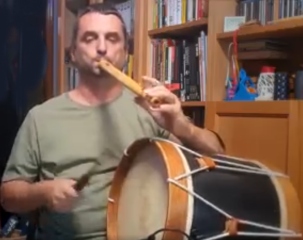
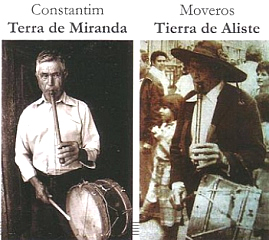
| The traditional musical line-up for most occasions follows a strict pattern of a trio consisting of either bagpipe or pipe and tabor, accompanied by a bass drum and a side drum. Since taborers did not play in groups together their pipes used to be in varied keys. More recently the keys are being standardised |
|||||||||||
| Some bands play traditional instruments at folk concerts . | 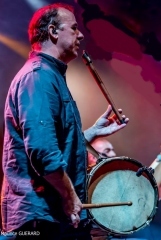 |
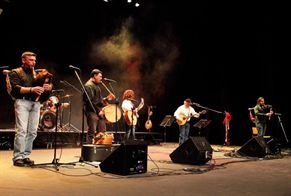 Frame Frame |
|||||||||
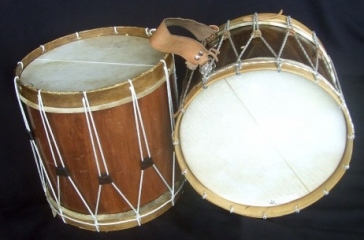 tamboril tamboril |
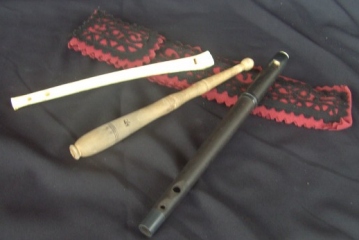 Galandum's instruments Galandum's instruments |
||||||||||
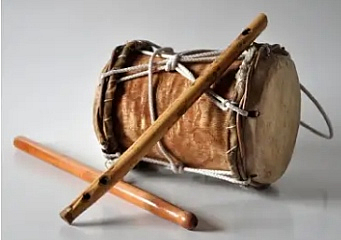 instruments used in
Trás-os-Montes e Alto Douro, and Alentejo, north-east Portugal instruments used in
Trás-os-Montes e Alto Douro, and Alentejo, north-east Portugal |
|
||||||||||
‘Portuguese entertainment music from the countryside,’ a film by Michel Giacometti, produced in 1972: This film shows different ways to relax together or to celebrate feasts. Musical instruments of the countryside |
|||||||||||
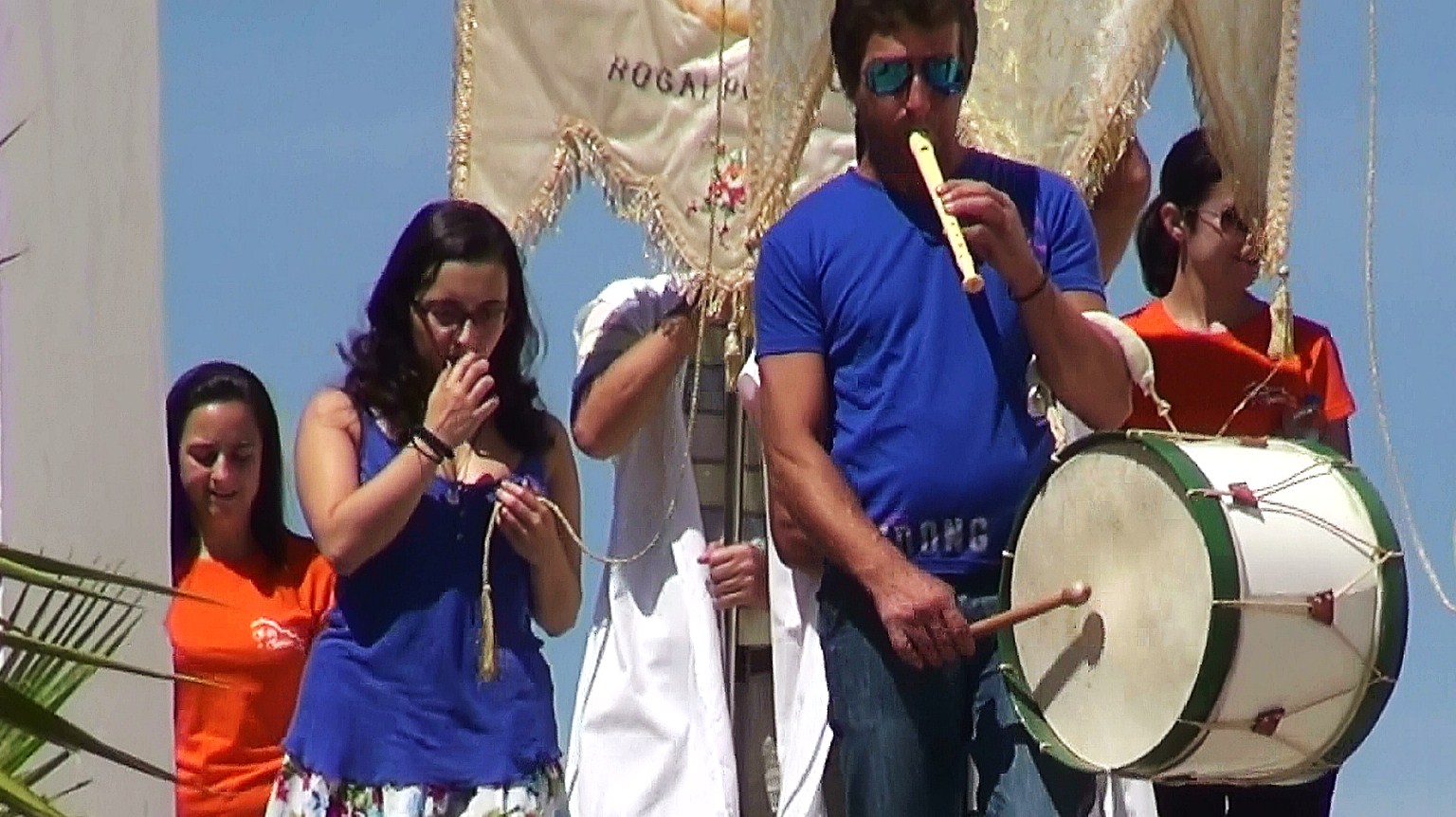
Women occasionally play the pipe
- Las Çaranda Cirigoça in 2014 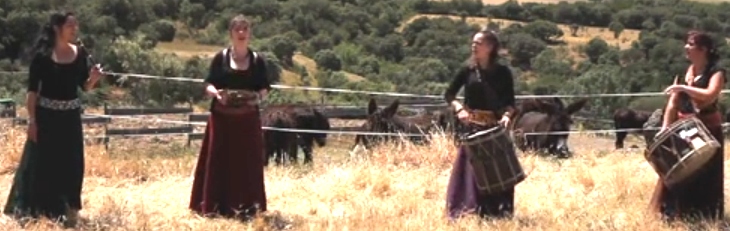 |
|||||||||||
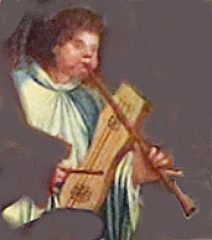
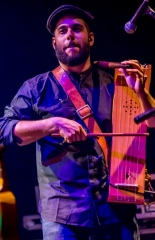
| Sometimes the pipe is played with the string drum. | |||||||||||
|
|||||||||||
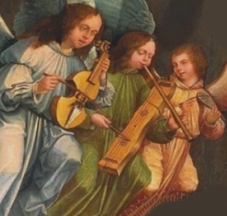
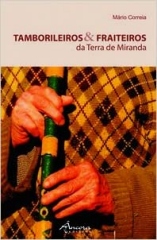


report on a research trip by Judith Cohen
top of page