Europe
Spain
Majorca
additional information by Matthew Spring
from a talk given at the 2011 Symposium of The Taborers Society in Gloucester, England
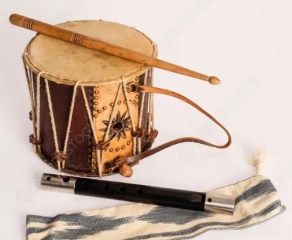
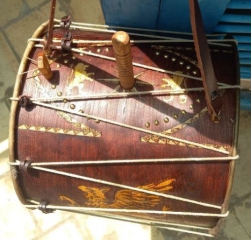
The pipe and tabor in Majorca is the flabiol. It has up to five holes with a range exceeding two octaves. The musician who plays the flabiol and tambori is a 'flabiolaire'.
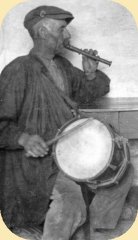 Joan Thomas 1927-36 Joan Thomas 1927-36 |
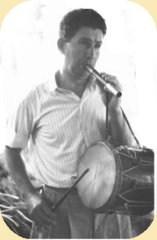 Sebastian Ordines Sebastian OrdinesMajorca, June 1952 |
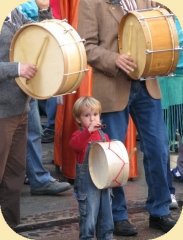 26ª Festa del Flabiol (Arbúcies) 26ª Festa del Flabiol (Arbúcies) |
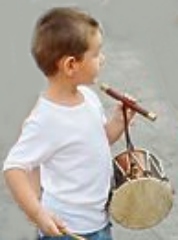 |
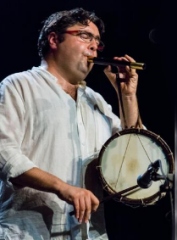 Pep Joan Martorell, Palma Pep Joan Martorell, Palma |
The five-holed flabiol can also be played without the drum, using both hands. This technique, largely fallen into disuse,
allows lower notes to be produced. The Flabiol is usually tuned in F (Fa), but it can also be found in D(Re),
Eb (Mi bemol), E (Mi), F# (Fa#), G (Sol) and G# (Sol#).
 |
 |
The pipe and tabor accompanying folk dancers.
Local folkloric traditions have been encouraged by successive governments. In the 1970's there was a revival
of the unique Majorcan traditions in language, folk traditions and politics. Today there are instruments in childrens
sizes and books written for them.
The flabiol and tambori traditionally accompany local folk dances. For example on 16th August annually a group
of dancers accompanied by flabiolaires dance through the town of Alaró, ending up dancing inside the church.
Processions of musicians also accompany the annual cycle civic and religious events. Villages running races are
organised and the tunes played relate to that race. During the summer a fiesta takes place to celebrate the killing
of animals and in January an animal blessing ceremony takes place, all accompanied by music.
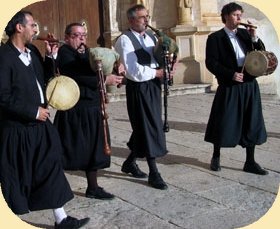 9. Animal blessing ceremony (January)
In order to play with other instruments a flabiol in the key of 'C' is now being played widely. Standard tunes
are played without harmonies.
Annual parade in Palma (September)
dating from 1229The instrument was traditionally only played by men but by the 21st century more women were playing in public. 2014 About 120 musicians from thirty groups celebrated the tenth anniversary in Sóller
2024 playing in church in Sóller
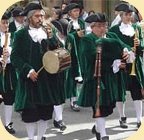
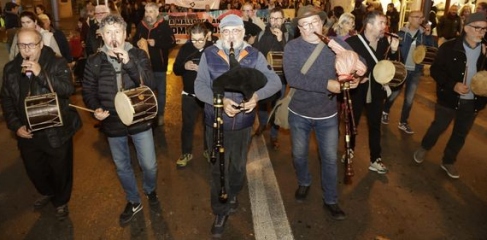
Another recent change is that this tradition, originating in, (or preserved in), the rural centre of the island is being taken
to the towns around the coast to be seen by tourists.
Majorcan schools offer courses in traditional dances and instruments. So innovative ensembles of young people
have formed performing the traditional repertoire alongside new compositions in both the old styles and in modern
music idioms.
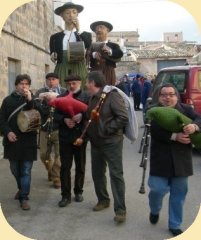
pipe and tabor with bagpipe
Both of these instruments are essential ingredients whenever Mallorcans gather for traditional celebrations
of many kinds and events including local festivals and processions.
A xeremier (bagpiper) and a flaviolaire,
together are called a colla . As the flabiol is pitched higher than the xeremia, it is an effective complement
to the latter. The xeremia can play only legato notes: the flabiol makes for greater melodic and rhythmic
variety and definition. [audio here (video, after 2.00mins)]
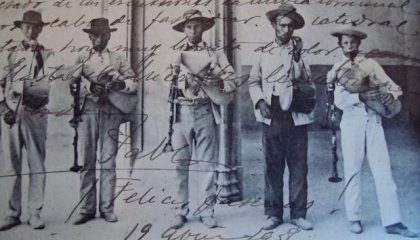 20th century postcard 20th century postcard |
|
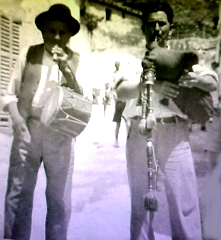 1950 1950 |
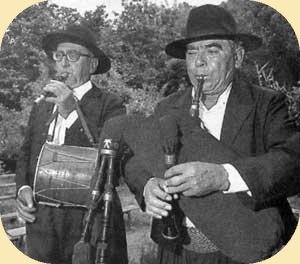 |
|
|
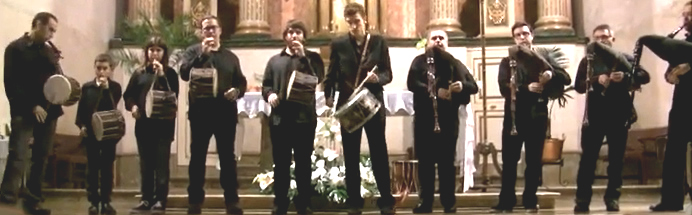 2014 Xeremiers Orats de Pollença concert 2014 Xeremiers Orats de Pollença concert |
|
 21st century accompanying folk dancing 21st century accompanying folk dancing |
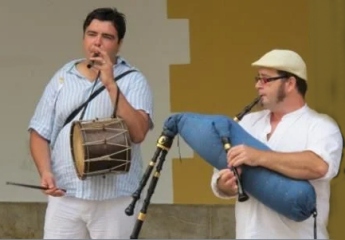 2016 2016 |
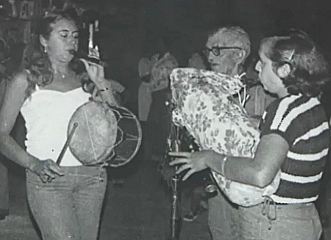 2019 [Festival now also in Barcelona, Catalonia] 2019 [Festival now also in Barcelona, Catalonia] |
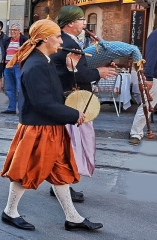 2024 investiture day of the Brave Women 2024 investiture day of the Brave Women |
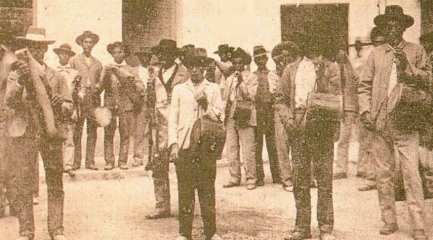
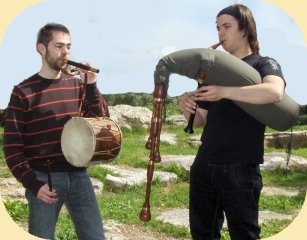
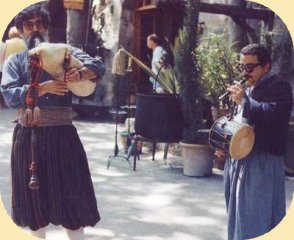
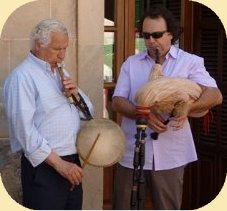
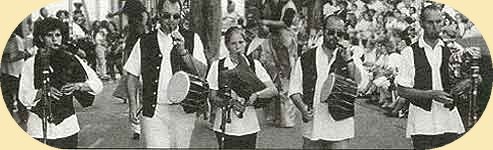
In rural areas the shepherds played on their own so they did not need to tune their instruments or practise.
Town musicians generally play in groups, wear uniforms and are in tune with each other.
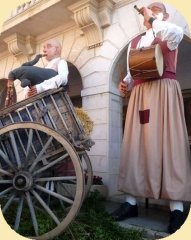
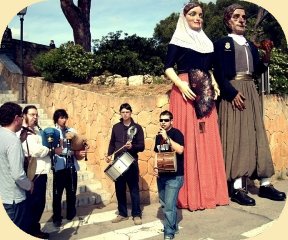
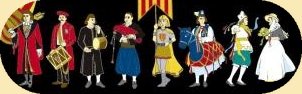
the Giants
There have been giants at celebrations in Majorca since at least 1630. Those used in processions these days
are a recent revival. [music on the flabiol and tambori here at with 2 giants, 3.00mins, first video at mid-page]
|
|
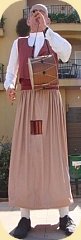
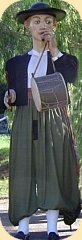
The Muro giants made their first appearance at the celebrations for the patron saint of the town, Sant Antoni, on 17 January 2004 for the traditional blessing by the local priest. Antoni, the piper, plays the xeremias; Joan plays the tabor pipe and drum. |
|
|
|
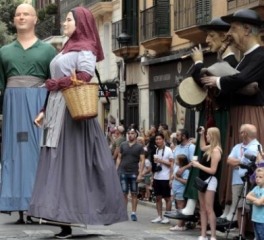 2022 Palma festival 2022 Palma festival |
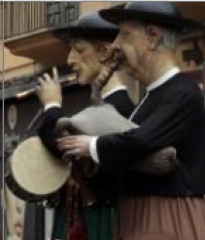 2022 close-up of giant flabiolaire and xeremias player 2022 close-up of giant flabiolaire and xeremias player |


top of page