|
1260 “The earliest literary reference to the pipe and tabor in Spain is in the book 'Ars Musicae'
by Fray Juan Egidio de Zamora. In a description
of the sound of the tympanum (drum or atabal),
he notes that the difference in sound intensity between the fistula (flute)
and the tympanum itself
must be taken into account if both are played together. |
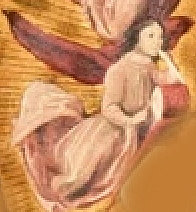
 1497 religious manuscript 1497 religious manuscript |
|
|
|
1401 Castille, the third manuscript of “The Book of
“good love”
by the Archpriest
of Hita.
the verse referring
to a flute (chiflo) with a drum as the 'tanborete' :
"Half a pipe and harp with the Moorish rabe,
Among them the joyful Francisco gallop,
The flute with them is higher than a crag,
With it the small drum, without it is worthless."
Juan de Garamendi (or Aramende), was at the service of the Queen:
“to Juan de Garamendi, ministril of tambourine, another twelve thousand five hundred mrs of the said his ration
and removal of the said time that he served the said princess [of Wales]”...
He travelled to England with the Princess of Wales
The House of Burgundy had two tambourinos: Carlos de Lacy and Aubert le Cont.
Flanders, February 1502.
“…The said duke came ringing trumpets, tambourinos and flutes to dismount in the courtyard;…”
'FLUTE PLAYERS, TAMBORINOS, XABEBAS AND FIFANS FROM CASTILLA AND
FLANDERS AT THE DAWN
OF THE RENAISSANCE' by
Ana LOPEZSUERO |
15th century At the court of Álvaro de Luna, Constable of Castile and Master of the Order of Santiago:
In his court, music always found a place and formed an essential part of both the nobleman's public
processions and his private entertainment, spheres for which, according to the chronicles of the time,
he had "many minstrels and trumpeters and tamborinos."
The presence of instruments at Court served both public representation functions and the need for music
in the private sphere. In both contexts, however, the instruments used differed. In the first case, so-called
"high" instruments were used. These were instruments with great sonic potential, generally wind instruments,
capable of being heard outdoors and in large gatherings, and were usually played by professional musicians
'Music and Courtly Culture in the Time of the Catholic Monarchs'
by Francisco Parralejo Masa |
From Court documents:
Empress Isabel had a tambourino, named Juan Sánchez,
who served from 1526 until his death.
1539 Juan Sánchez is called a "tamborino"
1549 Sebastián Sánchez was in the service of the Lady Infanta Doña Juana.
He was a master
in "appropriating dance" and a ‘tamborino’. |
16th century: Tamborileros were employed in Castile.
1526
Empress Isabella employed ‘un flautista y tamborino’ named Juan Sánchez, who served
in her chamber from 1526 until his death.
‘Sevillian musicians through their signatures (1570-1650)’ by Clara Bejarano PelliCer |
1772 novel:
“The long wished-for day of the feast and hour of the function being arrived …
First of all went the tabor and pipe and the dancers, eight of the smartest and most agile youths of Campazas..."
'The history of the famous preacher Friar Gerund de Campazas: otherwise Gerund Zotes. Vol. II / [by the Father Joseph Francis Isla] ;
translated from the Spanish in two volumes' by
Isla, José Francisco de |
1789 journal entry by an Englishman: Vittoria June 13th 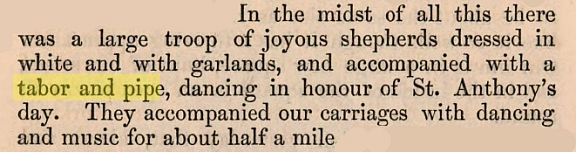 ‘The journal and correspondence of William, Lord Auckland’. II by Auckland, William Eden, 1861 ‘The journal and correspondence of William, Lord Auckland’. II by Auckland, William Eden, 1861 |
| |
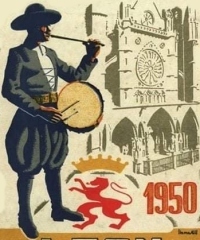 regional festival official programme cover regional festival official programme cover |
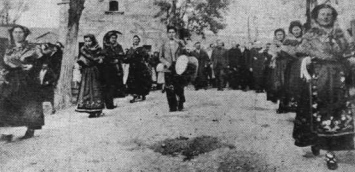 1950 photograph, playing for dancing display 1950 photograph, playing for dancing display |
 1950 enlargement of player 1950 enlargement of player |
|
 1950's photograph, taken from 1950's photograph, taken from
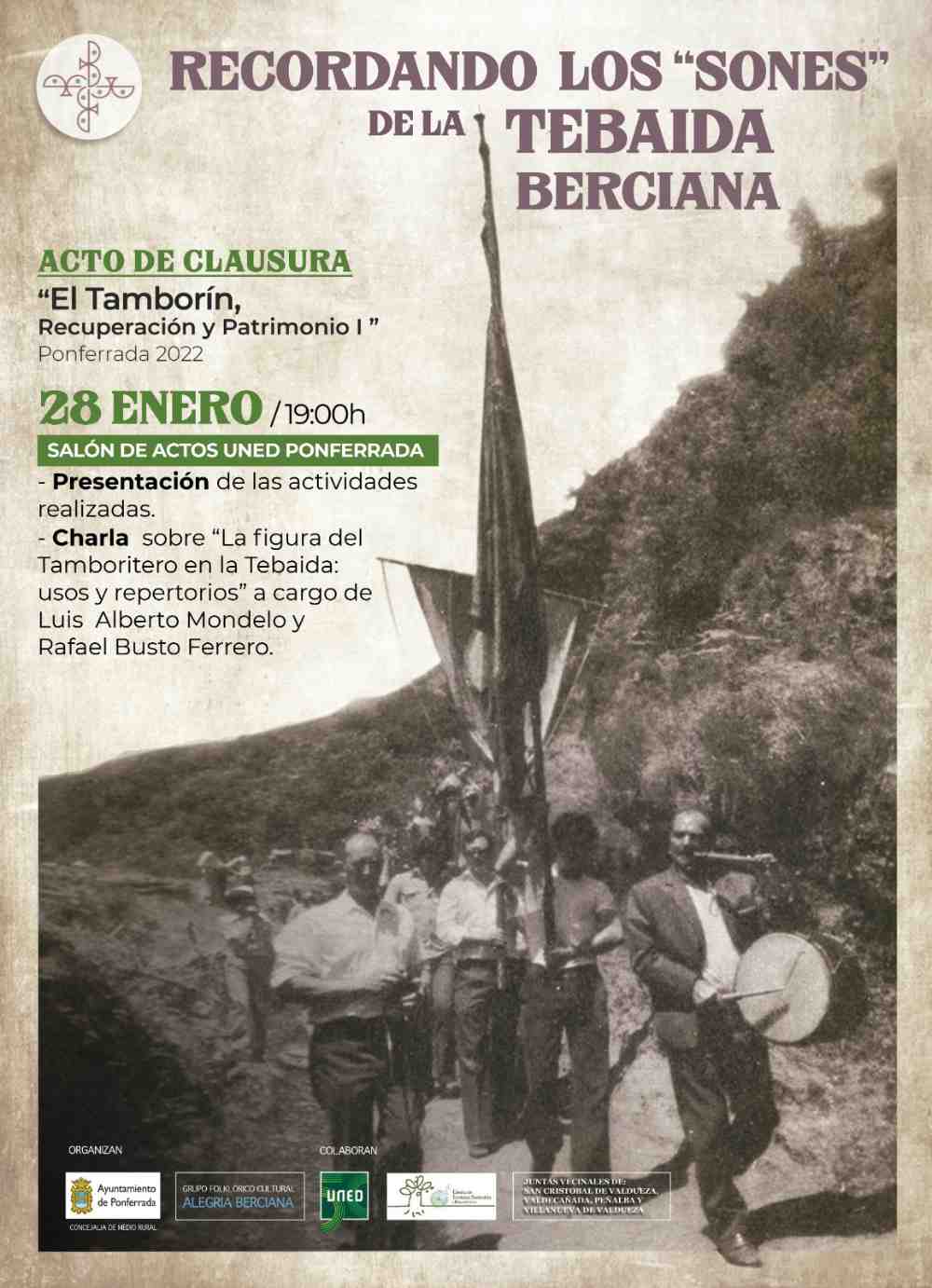
a poster advertising a talk |
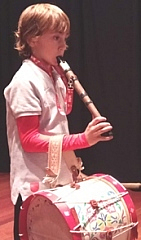
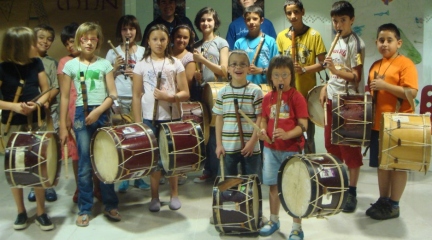 2008 children at the Ethnographic Museum of CyL 2008 children at the Ethnographic Museum of CyL |
|
| |
|
| Avila |
 c.1300 Cathedral of Christ c.1300 Cathedral of Christ
the Savior
of Avila (fig 9) |
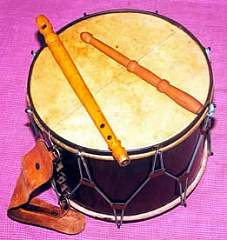
 16th century: drum in a cage with pipe and drum-stick 16th century: drum in a cage with pipe and drum-stick
said to have been used
by St. Theresa of Avila (1515-1582).
[Image curtesy of Juanma Sanchez] |
She took up the drum, along with the pipe,
and was known to dance in church
to the rhythms of her own
instruments.
A zealous
leader of church reform,
she scandalized more than one person
who stumbled
upon her teaching the nuns
in her convent to dance."
'Women Drummers: A History from Rock and Jazz
to Blues
and Country'
by Angela Smith |
1579
“...it was customary in the Corpus Christi celebrations in Ávila for these spectacles to be accompanied
by tamborileros…”
‘The Corpus Christi dances in Ávila at the end of the 16th century: festival and ritual as a showcase of the Counter-Reformation’
by Concepción Pedrero Muñoz |
|
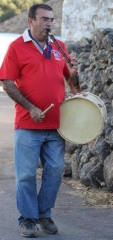 Pedro Manuel Díaz Fernández from Avila Pedro Manuel Díaz Fernández from Avila |
| Burgos |
February 20, 1502
"
After dinner, everything was cleared and taken, tables and trestles, out of the room. And then ‘el tamborino’
began to play for dancing, and they performed a dance or two.”
'FLUTE PLAYERS, TAMBORINOS, XABEBAS AND FIFANS FROM CASTILLA AND
FLANDERS AT THE DAWN
OF THE RENAISSANCE'
by
Ana LOPEZSUERO |
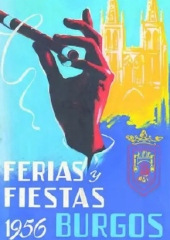
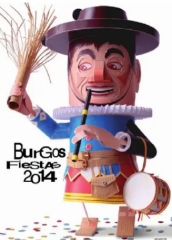
4 posters advertising the festivities of Saint Peter and Saint Paul |
|
|
|
 2011 with little giant 2011 with little giant |
|
|
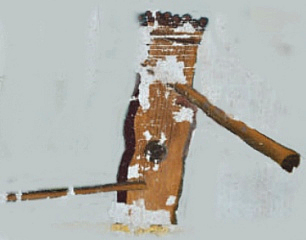 1510-1550 pipe and string drum 1510-1550 pipe and string drum
The palace of the Counts of Miranda
in Peñaranda de Duero |
|
|
|
| León |
|
| |
| Maragato |
In Maragatería the name flauta (sometimes frauta) predominates. It is also sometimes called a pito,
or a pito maragato, but this name was usually reserved for the small, high-pitched flutes which were
often made for children.
The most common Leonese variant of the three-hole flute is the maragata flute. |
 margarata pipe/flute margarata pipe/flute |
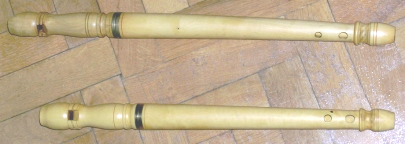 also called Chifla Maragata,this is the most characteristic instrument in the province of León, also called Chifla Maragata,this is the most characteristic instrument in the province of León,
and specifically in the regions of El Bierzo and La Maragatería. Currently, an agreement
has not yet been reached regarding its basic tuning
more on the Maragata flute here |
pipe from before 1910
“It belonged to Manolin Pastor, my great-great-grandfather. …
I think this is the one in the photo with the Castrillo dancers according to what he told me.”
said by Fernando Pastor, grandson of Manolin Pastor and son of Aquilino Pastor. This video [near the end of the interview] may feature this pipe played by Aquilino Pastor. This video [near the end of the interview] may feature this pipe played by Aquilino Pastor. |
Other recordings from 1952 here
much more on Leonise chiflas here |
|
|
 1909 dance display team. Taborer is 'Ti Manolín' 1909 dance display team. Taborer is 'Ti Manolín'
father of Aquilino Pastor |
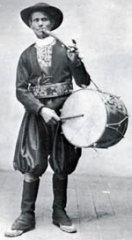 1926 José Alonso, 1926 José Alonso,
San Lorenzo Valley |
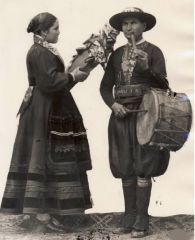 source source |
|
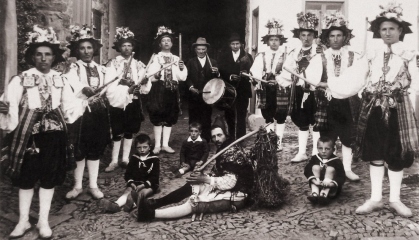 1928 dancers from Castrillo de los Polvazares 1928 dancers from Castrillo de los Polvazares |
|
videos with old photographs:
here and here |
|
|
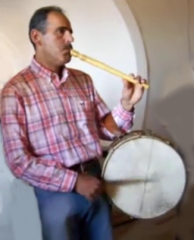 2008 Magdalena Festival 2008 Magdalena Festival
Castrillo de los Polvazares |
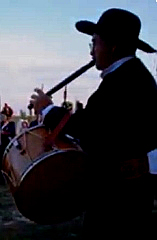 2010 Castrillo de los Polvazares 2010 Castrillo de los Polvazares |
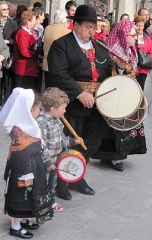 2011 Ramiro Fernández 2011 Ramiro Fernández
with children |
 Belarmino "Reta" Belarmino "Reta"
from
Argañoso |
|
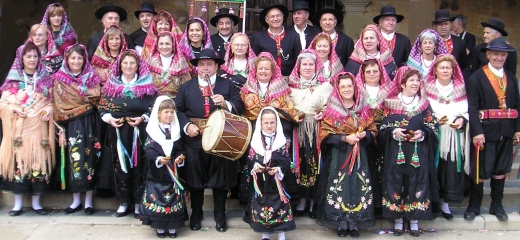 2012 group from Murias de Rechivaldo; 2012 group from Murias de Rechivaldo;
copyright: De Rodelar - Trabajo propio, CC BY-SA 3.0
|
|
 2013 2013 José Prieto Arce and nine younger taborers
Luyego de Somoza |
 2016 procession and festival music and dance, Luyego de Somoza 2016 procession and festival music and dance, Luyego de Somoza |
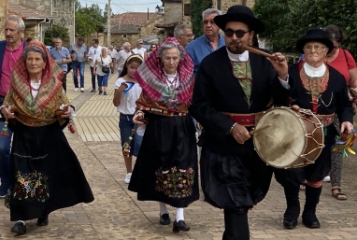 2023 2023 Maragatería Dance Group procession in Santa Colomba de Somoza |
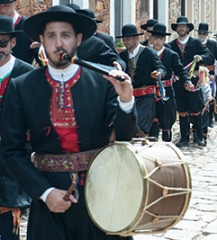 2023 Magdalena Festival,
Castrillo de los Polvazares 2023 Magdalena Festival,
Castrillo de los Polvazares |
|
| Palencia |
|
In the late 19th and early 20th centuries the pipe and tabor was displaced by the dulzaina and snare drum.
There are written references to the pipe and tabor playing for dancing
at Corpus Christi festivals since
the end
of the 16th century.
In Palencia in 1597, the alderman arranged a dance of eight …
”and they will go dancing and doing whatever else is necessary,
they carry a taborer to guide them..."
1613 "he would have to do a dance of tapping and playing for eight people with his tabor and pipe"
1626, four young men, … "made an agreement with Sebastián Salvador, taborer from Frechilla (Palencia), that …
This taborer would play on Corpus Christi day and another chosen one…without charging them anything….
On the third Sunday of each month … he would go around the streets of the town twice playing the drum or the psaltery"
between 1683 and 1752 the pipe and tabor also accompanied dancers at Corpus Christi in Villarramiel.
Until 1860 in the Cerrato region in the town of Valdecañas, Gregorio Garriche, "uncle Garriche",
played and also in the towns of Venta de Baños and Palenzuela. Gregorio’s life had a disastrous end when
he decided to end his days by hanging himself.
In the 20th century in Palencia Capital "uncle Liar" played in the Puebla neighbourhood for the brotherhoods
of S. Lázaro and also for stick dances until the 1940’s.
‘PAST, PRESENT AND FUTURE OF THE FLUTE AND THE DRUM IN CASTILLA Y LEÓN’
Article originally published in Txistulari n°172, 1997/4, by: Alberto Jambrina Leal and Carlos Antonio |
|
 |
|
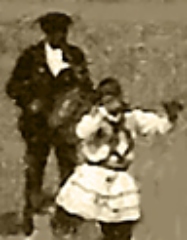
1908 photograph, playing for dancing display; enlargement of player |
|
| Salamanca - gaita charra y tamboril |
1497 Poet and composer Juan del Encina described the music at a banquet held in honour
of the King and Queen in Salamanca:
“The music was very high
and the musicians countless;
no good instrument was lacking
at these festivities:
…
dulzainas, royal flutes,
very elegant tamborinos”
‘Music and Courtly Culture in the Time of the Catholic Monarchs’ by Francisco Parralejo Masa, 2025 |
1531 for the Corpus Christi procession “ In Salamanca, a group of 'tafiedores de gayta y tanborjno' were hired ”
'MUSIC IN THE CORPUS CHRISTI PROCESSION OF FIFTEENTH-CENTURY BARCELONA' by KENNETH KREITNER
Early Music History (1995) Volume 14 |
September 3, 1589, in the town of Vitigudino a contract was signed:
“The said Sebastián Martín shall serve as drummer* for the young men
of this town for a full year, beginning
last Sunday, the twenty-sixth of August, during which time he shall play the drums
for the dances and other
festivities that the said young men of this town command him to play every Sunday
and holy day of obligation,
and the day of Saint Anthony and the day of Saint Roch, from midday until nightfall
on each of them, without
missing any day except for Christmas..."
* drummer -el tamborile / player of the 'tambourine' and three-holed flute / taborer
‘Danzas populares en Vitigudino (1589)’ by RUIZ JIMÉNEZ, JUAN 2022 |
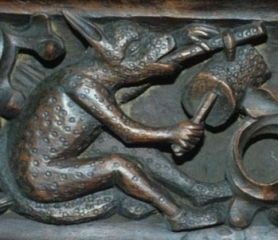 1498 -1503 wood carving in a church, Ciudad Rodrigo 1498 -1503 wood carving in a church, Ciudad Rodrigo |
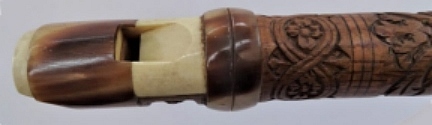 gaita charra mouthpiece gaita charra mouthpiece |
|
|
 pipes - gaita charra pipes - gaita charra |
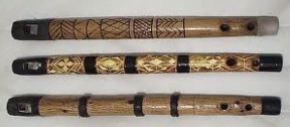 |
  |
 [Is this an Salamanca pipe? Please let Frances know here] [Is this an Salamanca pipe? Please let Frances know here] |
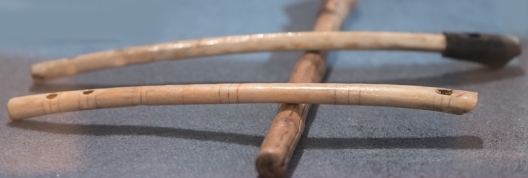 late 19th century / early 20th century late 19th century / early 20th century |
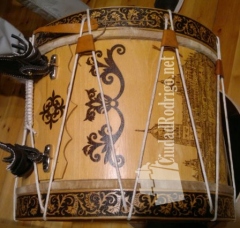 2015 tamboril 2015 tamboril |
 2015 exhibition in Ciudad Rodrigo 2015 exhibition in Ciudad Rodrigo |
|
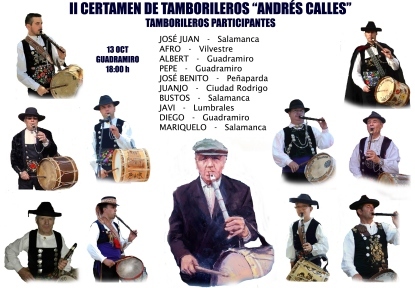
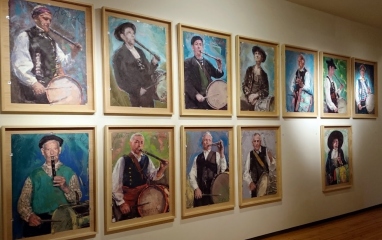 2015 exhibition of paintings of well-known players (Tamborileros) in Salamanca 2015 exhibition of paintings of well-known players (Tamborileros) in Salamanca |
|
|
 20th century 20th century
Zarza de Pomareda municipality
|
 20th century 20th century
Eduardo San Venancio
from Herguijuela
de la Sierra |
|
|
|
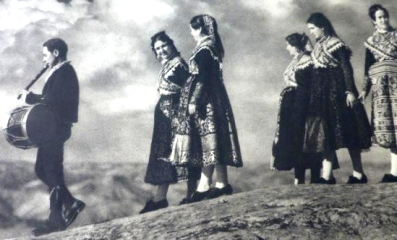 1940's art phtography 1940's art phtography |
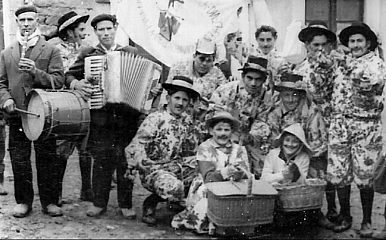 1960's / 70's carnival, Las Arribes del Duero 1960's / 70's carnival, Las Arribes del Duero |
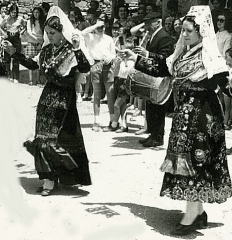 1971 playing for dancing in Guadramiro 1971 playing for dancing in Guadramiro |
|
1974: a time when the activity of taborers was beginning
to decline as a result of the general weakening of traditional
popular music and the advanced age of very renowned performers Pilar Magadán Chao set up the School
of Drummers
of the Provincial Council of Salamanca. |
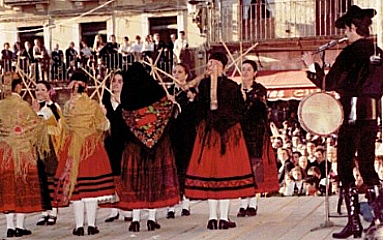 1980 stick dance 1980 stick dance |
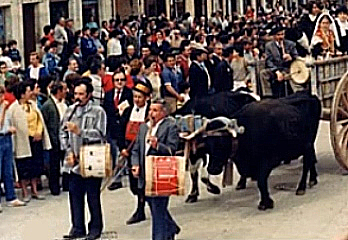 1980 Ciudad Rodrigo religious procession 1980 Ciudad Rodrigo religious procession |
|
|
|
| Segovia |
|
1613 In the town of Abades in Segovia,
it is specified that:
"he would have to do a dance of tapping
and playing for eight people with his drum and flute" |
| |
| Valladolid |
 pipe in
Joaquín Díaz de Urueña Foundation, Valladolid pipe in
Joaquín Díaz de Urueña Foundation, Valladolid |
 pipe in
Joaquín Díaz de Urueña Foundation, Valladolid pipe in
Joaquín Díaz de Urueña Foundation, Valladolid |
| |
16th century This province is the primary seat of government and de facto capital of Castile and León. It was
one
of the kingdom’s richest cities.
Ownership
of musical instruments
by individuals belonging to very different
social classes was very common
in the first
half of the 16th century.
” the maestros de danzar (dance masters) who, furnished with pipe and tabor (or salterio), provided the music
in various popular festivities. Such musicians were indispensable in the celebration of the Corpus Christi, for instance,
since they also accomplished the tasks of gathering the dancers, designing the choreography, and supplying
the required garments"
“Flute music is not a practice or entertainment for a nobleman, since it deprives the ability to speak while playing,
since the mouth occupies the mouth with the instrument, and the same is understood of the instruments of the mouth,
such as the shawm, sackbut, curtal, dulzaina, etc. [...]. There were also little flutes made from the bones of the cranes,
from which they took the name of tibiae, because the fifes that are played together with the drums of war are made
today of cane or leg bones of these birds “
String Drum pipes (Flautas de Salterio) ordered by people in Valladolid:
27 September 1553 -1
31 January 1593 -1
19 August 1593 -15
10 January 1600 -2
‘The Network of Musicians in Valladolid, 1550–1650: Training, Companies, Livelihoods, and Related Crafts and Trades’ by López Suero, Ana |
1605 book published in Medina del Campo with musical instruments pictured on the title page: 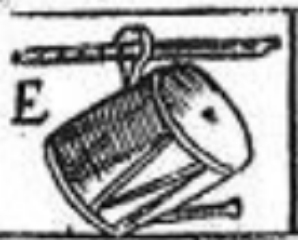 |
17th century
Valladolid
“…Eight giants appeared, representing the parts of the world: Romans, Turks, blacks, and gypsies, with rich
garments of taffeta and brightly coloured velvet, accompanied by two dwarfs and a tamboritero…”
‘A fleeting moment of fulfilment: The Corpus Christi festival in Valladolid during the first half of the 17th century’ by Lourdes Amigo Vázquez |
Between 1683 and 1752 a taborer accompanied dancers at Corpus Christi festivals in both Tiedra
and
Adalia.
Between 1773 and 1780 the same took place in Villanubla.
‘PAST, PRESENT AND FUTURE OF THE FLUTE AND THE DRUM IN CASTILLA Y LEÓN’
in Txistulari n°172, 1997/4, by: Alberto Jambrina Leal and Carlos Antonio |
1747 Corpus Christi procession in Valladolid 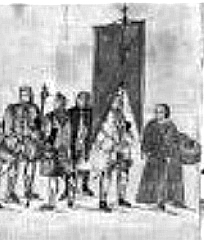 ‘The Corpus Christi festival in Valladolid of yesteryear (16th-18th centuries)’by Lourdes Amigo Vázquez ‘The Corpus Christi festival in Valladolid of yesteryear (16th-18th centuries)’by Lourdes Amigo Vázquez |
During the 19th century a taborer played at the Águedas (women's) celebrations in Torrelobatón for many years.
He was not
paid well. In 1871 100 reales were paid to the dulzaineros while the taborer was only paid 35 reales.
Between 1872 and 1875 Juan Almeida played by himself. Between 1878 and 1883 the dulzaina joined him.
1883 was the last
year in which this taborer appeared at festivities.
Máximo Mato stopped playing the pipe and tabor in 1920 in Peñaflor de Hornija, where he had previously taken
part in the festivities. A taborer from Aguilar de Campos town played in Ceinos de Campos municipality until
after the Civil War,
which ended in 1939.
‘PAST, PRESENT AND FUTURE OF THE FLUTE AND THE DRUM IN CASTILLA Y LEÓN’
in Txistulari n°172, 1997/4, by: Alberto Jambrina Leal and Carlos Antonio |
1826 memoir published in London, England: 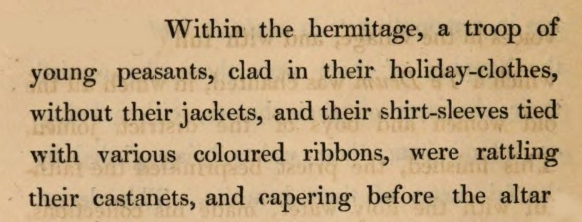
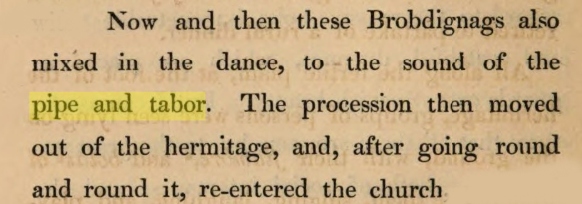 ‘Don Esteban; or, Memoirs of a Spaniard’ by Llanos Gutiérrez, Valentin, Chapter V ‘Don Esteban; or, Memoirs of a Spaniard’ by Llanos Gutiérrez, Valentin, Chapter V
|
|
| |
| Zamora - flauta y tamboril |
|
 1810 1810 pipe made from oak, bone, brass, steel; Villarino |
 1986 pipe made from cherry wood, aluminum, rubber 1986 pipe made from cherry wood, aluminum, rubber |
1260 “The earliest literary reference is found in the book 'Ars Musicae' by Fray Juan Egidio de Zamora
who, in a description of the sound of the tympanum (drum or kettle drum), notes that the difference
in sound intensity between the fistula (flute) and the tympanum itself must be taken into account
if both are played together.” |
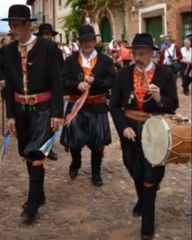
 20th century accompanying Sayagueses dance display team from Bermillo de Sayago and La Muga de Sayago 20th century accompanying Sayagueses dance display team from Bermillo de Sayago and La Muga de Sayago |
|
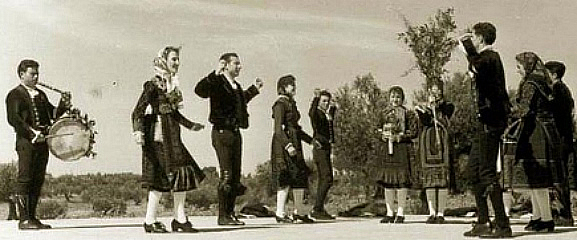 1930's dancing in Almarazde Duero 1930's dancing in Almarazde Duero |
|
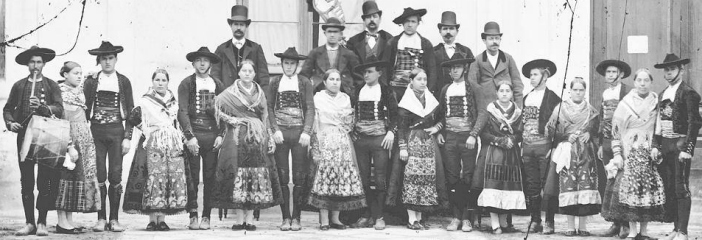 1930 village of Bermico de Savago 1930 village of Bermico de Savago |
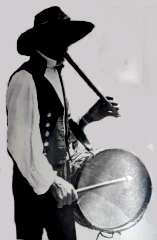 1973 religious procession 1973 religious procession |
|
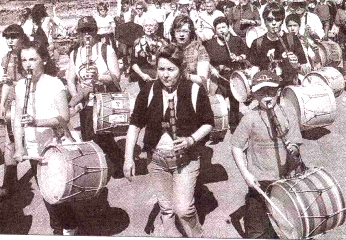 2008 pilgrimage of Los Pendones de Fariza 2008 pilgrimage of Los Pendones de Fariza |
 2023 pilgrimage of Los Pendones de Fariza 2023 pilgrimage of Los Pendones de Fariza |
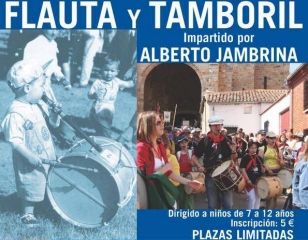 2008 poster 2008 poster |
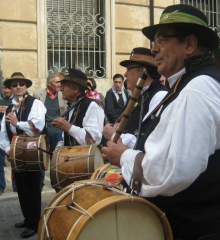 2013 Toro 2013 Toro |
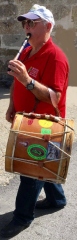 2017 Pilgrimage 2017 Pilgrimage
of the Peregrine Mother
Donado |
|
 2018 Alberto Jambrina Leal accompanying dancers 2018 Alberto Jambrina Leal accompanying dancers |
 2020 giants with Alberto Jambrina Leal 2020 giants with Alberto Jambrina Leal |
 2022 Alberto Jambrina Leal 2022 Alberto Jambrina Leal |
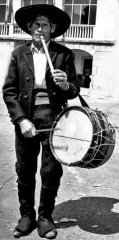 unknown unknown |
|
|
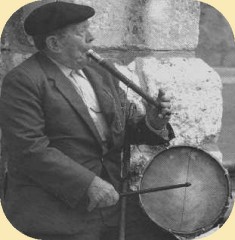
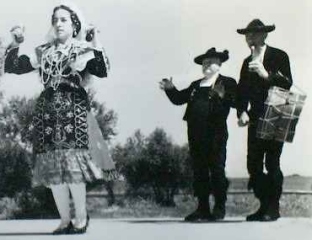
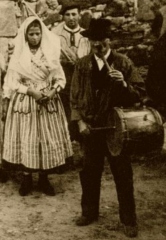
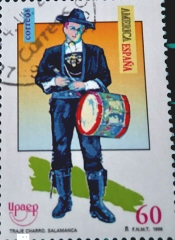
 20th century parade
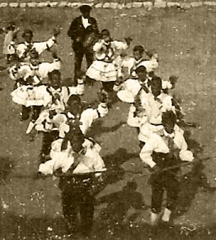
  1930's display team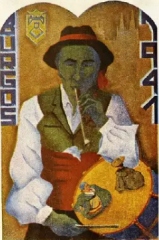




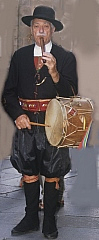

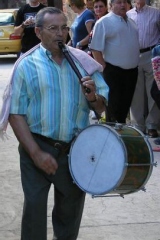

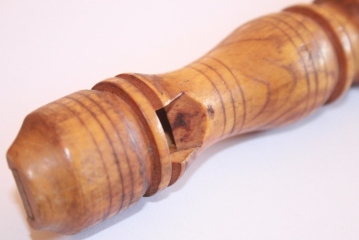
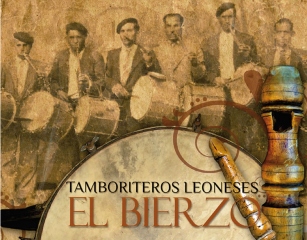
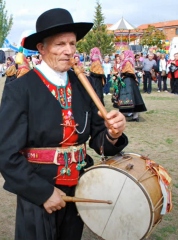
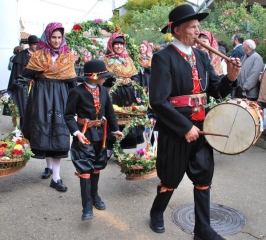
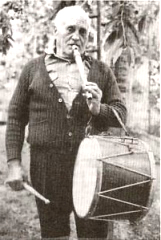

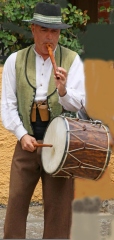
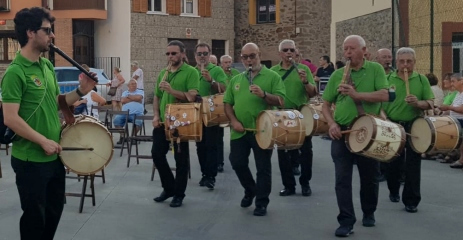
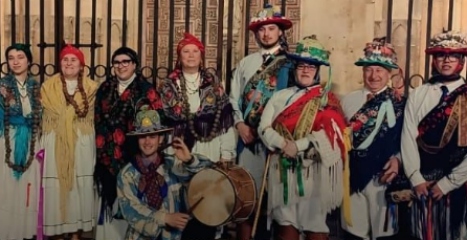
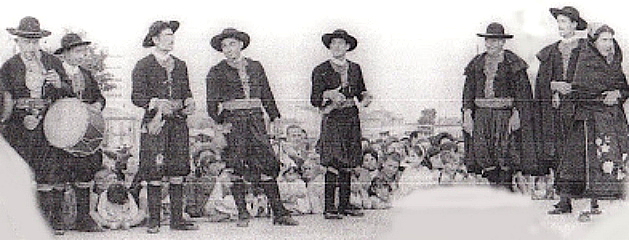
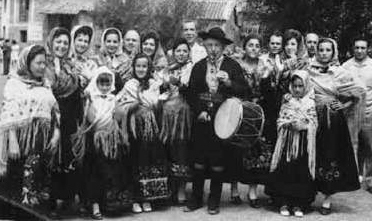







 2015 [image not available online anymore]









.jpg)


