the Pipe and Tabor compendium

the Pipe and Tabor compendium

essays on the three-hole pipe

Europe: Spain - Basque country

introduction to the Basque country

images of Basque country players here
Basque country publicity posters here
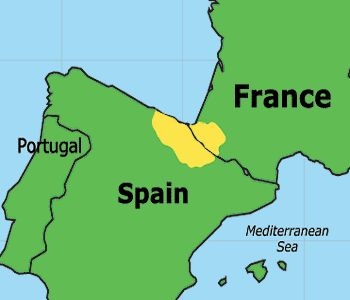
map

The Basque region on the borders of Spain and France have several mountain tabor pipe traditions, but the dominant form
– the txistu – and the players – the txistulari – have become an expression of Basque identity. The first mention of the txistu
dates from 1864.

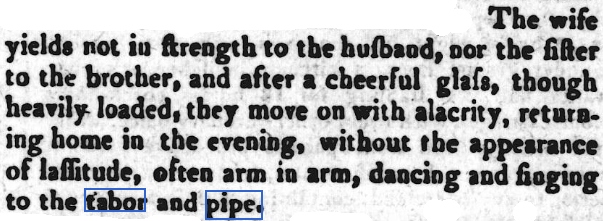
1810 ‘description of the Town of Bilbao’1810 Saunders's News-Letter - Friday 13 July 1810

1836 newspaper report
1836
1836
1836Sun (London) 29 August 1836

1836 in Durango 1836Morning Post - Wednesday 26 October 1836

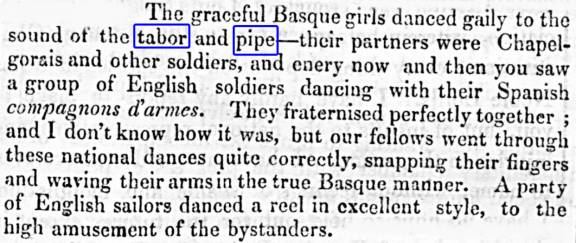
18391839London Evening Standard - Thursday 12 September 1839
1842 1842‘Blackwood's Edinburgh magazine’. 52. 1842
1845 holy days dancing1845‘Encyclopaedia Metropolitana; or, universal dictionary of knowledge, on an original plan: comprising the twofold advantage of a philosophical
and an alphabetical arrangement, with appropriate engravings‘: Edited by Edw. Smedley, Hugh Jam. Rose, and H. John Rose.
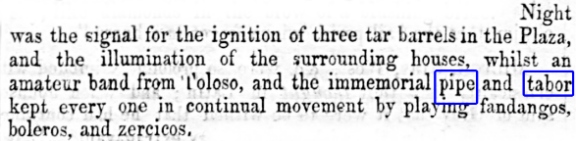
1846 story 1846Lloyd's Companion to the Penny Sunday Times and Peoples' Police Gazette 20 September 1846

The Queen came to visit. Local people danced to the pipe and tabor.

The Examiner - Saturday 16 September 1865

An old pipe found in a farmhouse in Gipuzkoa, Oñatiold pipe

txirulatxirula, Horniman Museum, London
Txirulatxirula - French Basque country played with the danburi (drum)

1878 newspaper report in London, England, regarding Biarritz annual event: 1878Globe - Wednesday 04 September 1878


top of page