the Pipe and Tabor compendium

the Pipe and Tabor compendium

essays on the three-hole pipe

England: history of the pipe and tabor

the 17th century players

In the 17th century neither terminology nor spelling were fixed. So a pipe and tabor player could be, for example,
a minstrel, a musician, a drummer, a pyper, taber and pipe or a fidler. It is impossible to know now which of
some of the quotes below are taborers or players of other instruments as seen in contemporary images.
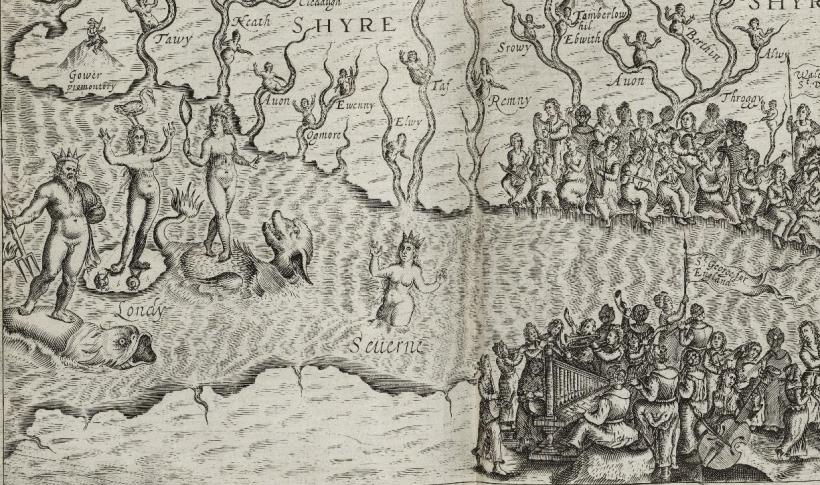
16131613 map, illustration of a women's band
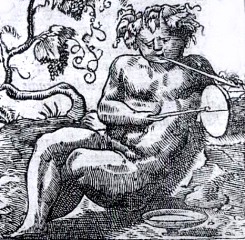
16141614 Bacchus, illustration in 'Emblemata'

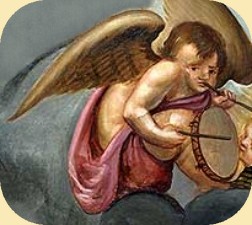
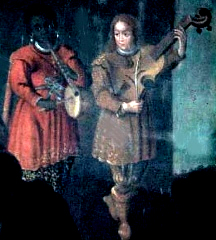
1619 ceiling painting
Bolsover Castle Derbyshire

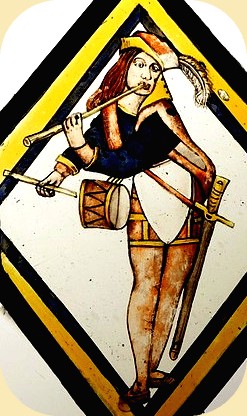
Betley Window1550-1621 Betley window
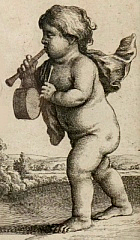
17th century17th century etching, 'Six Boys'  
before 1606 - Robert Smyth, a preacher and lecturer, was an extreme Puritan.
"...His refusal to wear a surplice, though ordered to do so by the bishop, brought the dispute to a head.
He was inhibited, but his followers retorted by accusing the vicar of being a companion of tipplers and
fooling away his time with pipe and tabor, and finally bringing an accusation against him, on account of
which the poor man was cited before the High Commission Court. The charge came to nothing..... "

1907 'The Parish Clerk' by Peter Hampson Ditchfield (1854–1930)

1601 Carlton cum Willingham, Cambridgeshire; Diocesan Court Proceedings:
“…did bringe Iohn Lawrence upon a cowlestaffe into the Charchyard, & set him Downe at the Chauncells
end… Reekwood a fidler [was] in the companye …”

1603 ecclesiastical court record for Ashurst, Sussex, notes a musician who played fiddle, pipe, and tabor.
‘Sussex - Records of Early English Drama’

1604 Letter from The Earl of Shrewsbury to Viscount Cranborne.
“…At Sheffield Lodge (where we have no other music this Christmas than the waits of the next town
besides a taber and a whistle), this Friday, 28 December 1604.”

Calendar of the Cecil Papers in Hatfield House: Volume 16, 1604.

Early 17th century, Norwich
“The authorities were aware of the power that music had, and therefore the musician, in drawing crowds.
When the Mayor’s Court allowed for sideshows and entertainments, it was on the condition that no music
accompany the act or to assist in drawing in patrons….

Musicians could well have found a home in alehouses and inns where they could perform for pay and away
from the prying eyes of the authorities….The nearby city of Cambridge certainly saw minstrels perform
in the inns, taverns, and alehouses, as did Coventry and in Lancashire.

The civic desire to stop any unlawful music was so strong that sometimes the Chamberlains allocated sizable
sums to players in order that they do not play in the city at all.

‘A Study of the Musicians of Norwich, 1558-1660’by Elliott Ford, 2019

Itinerant performers in the North Riding ranged from individual pipers, fiddlers, jugglers, and others living close to
or below the poverty line, to organized companies of travelling players. Most of these did not play under gentry
patronage and so were vulnerable to arrest and punishment under the Elizabethan and Stuart poor laws governing
 'rogues, vagabonds, and sturdy beggars' When these people were apprehended, the court normally recorded
not only the names but also prosecuted those who provided lodging and performance space for them.

1606 Thornton Watlass, Yorkshire North Riding;  Quarter Sessions Records:
“…George Lewling of Watlass kept a piper, and harboured him in his dwelling house for two weeks, and also
received servants and young people into his aforesaid house at various times, and allowed them to remain there
and stay at night time, that is to say, after the ninth hour after midday.”

1607 Leicester villages rioted over enclosures of common land. In Ladbroke the riot procession was
led by a captain on horseback and a man playing a pipe and a tabor.

1607 Wells, Somerset:
“Intergatoryes to be ministred to Edmond White…did you or other by your meanes or procurement
upon the said Third 10 Daye of May in the said fifte yere of his Ma/t/ Raigne procure Robart Mayne
John Mayne and one Thomas wingood to play with Taber and ffidles before a greate Companye that Day
assembled in Welles …did you or other notwithstandinge, aide the said fidlers or Minstrell then against
the Complaynant…did you or any by your Meanes then thrust and lusde the compaynam and compasse
in the compaynant and beate or stricke upp one or two drummes… beinge a Saboth day, Did you or any
other procure or Hire one Thomas Wingood to play on the Taber in Wells…"

Examination of Oliver Martin, Labourer (15 May)
“…Thomas Wingood mentioned in this Interrogatory to play on the Taber in wells But the saied Thomas
wingood being no common Taberer did uppon the same day of his owne goodwill play uppon his Taber
in the towne of wells…”

Interrogatories for Principal Defendants in Hole v. White et al ‘Somerset including Bath 1: The Records - Records of Early English Drama’

1608 Tydd St Giles, Cambridgeshire:
“… he behaved himselfe very unrevently in the Churche in the time of the sermon with one
 Edwarde Towe a fidler in laughinge & gurninge to the offence of many then present …”

1609 "Edward Towe, a fiddler or minstrell.  A presentment is made at Tydd St Giles …the said Towe is cited.
And he having been summoned, did not appeared. He is suspended. …The same Towe has died.”

Diocesan Court Proceedings

1610 Walsall,West Midlands; note of an affray involving `revellers led by pipe and tabor'
Beier, A. L. 'Masterless Men: The Vagrancy Problem in England 1560 -1640.' 1985
1610-11Scorton Yorkshire North Riding; Quarter Sessions Records:
“The Jury also present Iohn Lockey alias Lockwood of Scorton for the aiding, &c, harboring and mainteyning
of certain people to the inhabitantes unknowne, being people of badd behavior, mightily suspected for many
bad misdemeanours, himself verie lewdly given, frequenting bad companie in markettes, faires and other
frequented places where resortes of people is, being in the nature of a drummer;…”

1611 Sir Richard Paulet's Household Accounts at Stanbridge and King's Somborne, Hampshire :
 "to speede for playing on ye taber    xij d"

1612 Peter Hales (1565-1643), known as 'Blind Pete', played the pipe and tabor for the Stafford hobby-horse
and on other civic occasions. The churchwarden’s accounts for 1612 state that 2s was paid to 'Blind Peter' for
“playing at the hobby-horse”. 1632-33 he was paid 2s for playing “on the election day”

'Peter Hales, taberer' was fined 20s for keeping an unlicensed tippling house in the town in 1614.

Stafford had a hobby-horse as far back as 1528. It used to dance at winter festivals and ales, and was a festive way
of raising money from the town's councillors and rich people. By 1638 the custom was beginning to die out as serious
minded church people and Puritans disliked the idea of raising money for the church by dining, drinking and entertainment.

pamphlet written by D.A.Johnson of Stafford Historical and Civic Society, 1974-76 titled '“The Stafford Hobby-Horse'”

1613 “…Kelvedon, Easterford, Colchester, John Ayly, an alehouse-keeper, was presented in the archdeacon's court
`for suffering of a fiddler to play with taber and pipe in his house upon the 9 of May, being the sabbath day,
in time of divine service'.”

J. A. Sharpe in `Crime and delinquency in an Essex parish 1600-1640' (in Crime in England 1550-1800, ed J.S .Cockburn (1977), 90-109

Early 17th century Southampton
"Itinerant fiddlers, pipers and percussionists … the town's indigenous musical culture was firmly embedded in alehouses. Succumbing to a common occupational hazard, musician Stephen Chaplin was divested of his licence to perform for
`drunkenness and other misdemeanours' in 1619, while it was not uncommon for one of the five badged and livened town musicians to be awarded alehouse or tavern licences to supplement their official stipends; alehouse-keepers William
Tompson in 1609, William Greene and John Brown between 1619 and 1620, and taverner Thomas Spaight in 1639

‘The Landscape of Drink: Inns, Taverns and Alehouses in Early Modern Southampton’ by James Brown, 2007

c. 1613 Letter from William Carswell to Richard Weekes:
“my master would farther pray you according to your promise to lay your autoryty uppon
tom taberer and bring him with you to drive of Melancholly”

‘Somerset including Bath 1: The Records - Records of Early English Drama’

1613 Winchester College Bursars' Accounts:
"(Necessary expenses with gifts)
Likewise to musicians as a favour of the lord warden and fellows 10s
Likewise for pipers as a favour of the lord warden and fellows 13s 4d"
1613 Brandsby Hall, Yorkshire North Riding:  payment for Christmas entertainment
“The pyper of Myton for Christmas tyme pypynge I payd him v s. ...”

Richard Cholmeley's Memorandum Book

1614 Accounts of Thomas Eyton, clerk of the kitchen
To the Taber and pype in the hall at christmas  ij s. vj d

REED Shropshire, page 92

1614 “Willelmus Harden maynteyneth dysorder as dauncinge pypinge swearinge & swaggeringe"
Archdeaconry of Stafford Visitation Act Book
.
1613 The voyage of Captain John Saris to Japan:
Journal of John Saris, Captain of the Eighth Voyage of the Company: In January 1613
Saris was at Bantam in Java, preparing for the second stage of his voyage on the ship Clove.
14 January his journal: 1613source (page 21)

1614 a number of pipers were prosecuted at Hutton Buscel, Yorkshire North Riding,  Quarter Sessions

"...The Jurie for our sovereigne Lord the king uponn their oathes present & finde that William Gascoigne of Hutton bushell
 had a metinge of younge people on St Peters day last, and a piper with them one Lawrence Johnson of Scarbrough.
The Jury: &c. do present & finde that Emott Iackson of Pickering vidua had a metinge of younge people and a piper
with them called Lawrence Hicke on midsomer day last:
The Jury &c. do present & finde that James Sparke of Pickeringe had a metinge of young people and a piper with them named William Ward of Middleton on St Peters day last.
The Jury &c. do present & finde   Nicholas Wood of Pickeringe for the like:
The Jury &c. do present and finde that Richard Elles of Thornton had a metinge of younge people and a piper with them
called Gilbert Theaker on Whitsonday last. "

1614 Kirby Misperton, Yorkshire North Riding,  Quarter Sessions:
"The Jury for our sovereigne Lord the king upon their oathes present Richard Darrell of Kirkby misperton 
Alehouskeeper for entertayninge & receiuynge into his house upon a sabaoth day in December last and in
time of evening prayer divers persons being no travalers and withall had in his house a piper named Henry ffoster
 being no inhabitant there but a wanderer, and suffered the said Piper to escape and did not apprehend him and
carrie him to the Constable according to the Statute ..."


1615 Freefolk, Hampshire; Sir Thomas Jervoise's Household Accounts:
“Item for pipinge    0–0–1”

1615 In November William Harrison, his wife Isabella, and John Gowling were presented before archdeacon
William Morton (1560–1620) at Barnard Castle – the latter for piping and “those two dauncing upon the saboth.”

Theatre, Catholic Communities, and Popular Entertainment in England’s North-East, c.1600-1625 by Gašper Jakovac

1616 Burton upon Trent, Staffordshire: 
“…The said Jane ... went from her brothers house in Ansley with one 
Scott a Piper in the night, and staid forth one or more nightes,..”

Archdeaconry of Stafford Visitation Act Book

1617 High Littleton, Somerset, Quarter Sessions Roll
“And the saide Tanner being a fidler doth uppon the saboth dayes use fidlinge at Inns and Ale housses
wherby the saboth day is much profaned. ...”

‘Somerset including Bath 1: The Records - Records of Early English Drama’

1618 Tutbury, Staffordshire; Regulations Governing the Minstrels' Court
A set of rules was drawn up to regulate and impose standards on minstrels and musicians in Derbyshire and Staffordshire.

1619 Archdeaconry of Ludlow Acts of Office:
“Maria Blakeway wife of Rogeri Blakeway …that shee the xxij day of August 1619 being Sunday together
with others did manteigne a minstrell to play with taber and pipe in the howse of one Edward harding ale seller
betweene morning and Evening prayer she with others there dancing before Evening prayer “

Records of Early English Drama - Shropshire, 10th day Novembris 1619

1619 Richard George of Westminster, taborer, was fined £20 and told to keep the peace

WESTMINSTER SESSIONS OF THE PEACE: COURT IN SESSION 16th Oct 1619

1619-20 William Simson's Disbursements
“Item to one of mllam that playd upon a drume & a pipe  vj d”

REED, CUMBERLAND WESTMORLAND GLOUCESTERSHIRE page 94

1620's In Worcestershire generally there were increasing prosecutions for Sabbath-breaking in the early l600's,
continuing unabated in the 1620s. Some Bishopston people found themselves in trouble
for playing the tabor and pipes during evening prayer time.

1620 In Benton, just outside of Newcastle, Christopher Dawson entertained:
“a companie of fidlers playing at cards in his house on the first sondaie after the Epiphanie
last all the tyme of dyvine service and administration of the holy Communion”.

Theatre, Catholic Communities, and Popular Entertainment in England’s North-East, c.1600-1625 by Gašper Jakovac

1620 Cambridge 1620"An English garner; ingatherings from our history ...
1620-21Winchester, Hampshire;  Winchester College Bursars' Accounts:
  (Necessary expenses with gifts)
To piper        1s
To pipers of magnates      5s

1620 Robert Hesketh, in in the probate inventory of his father’s musical instruments at the family house,
Rufford, included ‘taber, pipes

‘HOUSEHOLD INVENTORIES OF THE LANCASHIRE GENTRY, 1550-1700’ BY OWEN ASHMORE, M.A. 1958

1622 Hovingham, Yorkshire North Riding; Quarter Sessions Records
 “…Raph Theaker the piper shalbe sett in the stockes att this present Session att Thirske and likewise
att Hovingham:… for misdemeanors done upon the Sabaoth daie att Hovingham shalbe bound to the good behaviour…”
1622-23 Nunwell House, Hampshire; Sir John Oglander's Notes and Accounts:
“for salte and the minstrell          0  2  6”
1626 Winchester, Hampshire; Winchester College Bursars' Accounts:
“Paid to pipers on sundry occasions     5s 10d”

1628 Court Petition by a taborer
“To the Righte Worshipfill the Bayliffes of Shrewsbury -The humble peticion of John Davyes Taberer
Humbly sheweth that your poore peticioner was taken by master Bayliffe rowley upon saterday nighte laste
aboutes Twelve of the Clocke in Playinge upon the Taber & pipe in a Bardge at the Key in ffranckwell
amongeste a Company of Bardgemen…”

“Upon this submission the peticoner was discharged promising to leave off playinge on the Taber & pipe hearafter”

REED Shropshire, page 317

1630-31 Winchester, Hampshire; Winchester College Bursars' Accounts:
“Paid to pipers as a favour         10s”

1631 Checkley, Staffordshire;
“for keepinge a piper playinge in his house on whitsundaie last in prayer tyme in ye afternoone,
hee hath daughters come not to Churche,…”

Archdeaconry of Stafford Visitation Act Book

1631 Leek, Staffordshire;
“Joan Swyndon - for entertayning of divers persons into her house who have prophaned the Sabboth
 by gamninge pipinge and dauncinge”

Archdeaconry of Stafford Visitation Act Book

1631 Rushton, Staffordshire;
(Against) Richard Slack and Francis Miller
 “for entertayninge of divers persons into their houses who have prophaned the Sabboth
 by gamninge pipinge & dauncinge”

Archdeaconry of Stafford Visitation Act Book

1631 Farlington, Yorkshire North Riding;
“ Cicilie Thompson of ffarlington Widdow being an Alehouskeeper for keeping disorders in her house,
and harbouring of ffidlers, Pipers, Tinckers, & wanderers contrarie to the forme of the statute …“

Quarter Sessions Records

1631 Habberley, Shropshire
“Richard Cowper for playing with a taber and pipe in time of divine service in the afternoone the xv day of Maie”

Archdeaconry of Ludlow Acts of Office, Proceedings of the court held for Pontesbury deanery

1633 Warwick Priory flour mill dispute:
“In 1633 a dispute arose concerning the [grain] loaders from the Castle, Guy's Cliffe, Emscote, and Priory mills,
who went with their horses into Warwick to solicit grain for grinding from the inhabitants. Witnesses agreed
that one horse only was allowed from each mill, and an ancient custom was cited, whereby on Midsummer
Day the four loaders rode in procession up and down the town, the loader from the Castle mill coming first…,
followed by his fellows from Guy's Cliffe, Emscote, and the Priory, playing a pair of bag-pipes, a fiddle
and a pipe and tabor respectively.”

1633-34 Aldermaston, Berkshire:
"Thomas Hellyar of Aldermaston in the County of Berkshire [was a] Gardiner and Minstrell "

1634 Scarborough, Yorkshire North Riding; 
“The examinacion of william Percey of Slingsby in the Counte of york piper taken before Gregory ffishe 
one of the baliffes of the towne of Scarbrough and one of his Maiestes Iustices of peace within the said Libertes …”
“The said examinant saith that he hath beene in the towne of Scarbrough ever since satterdaye was a senett
and hath beene playeinge of his l<..>d and pipes ever since….”

Scarborough Borough Court Papers

Mersennus, a French polymath, mathematician and writer on music (middle of 17th century) mentions
an Englishman, John Price, who was an accomplished pipe and tabor player.

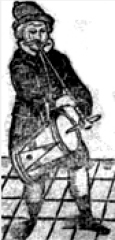
  1630 1630 book illustration unknownsource

17th centuryStang Ride in a magistrate's house, wall decoration

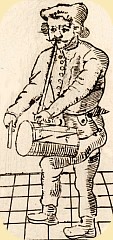
player 1611 book illustration mid 17th century

1648-1673
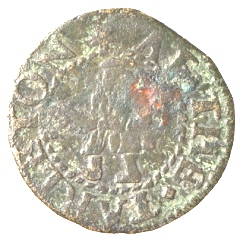
Trade token, worth a farthing, issued for a business at the sign of Tarlton (Richard, a 16th century actor), in Wheeler Street, Middlesex.

inscription: AT.THE.TARLETON (around field, in Roman capitals) Device  Figure of Tarlton with pipe and tabor. 

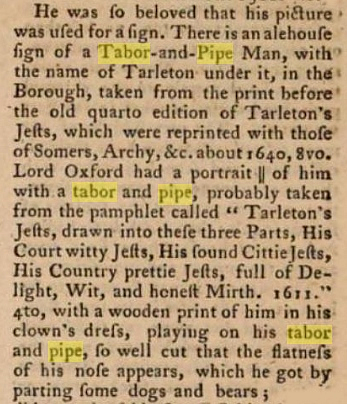
1640 / 1780 Tarlton 1780The Gentleman's Magazine - Volume 50 - Page 325

1633 criticism written by William Prynne, 1600-1669. [Ed - 'pipes,' 'pipers' 'fidlers' and 'tabers' may include pipe and tabor players here]

Page 194
“…disgrace their masculine sex with womanish attire, &c? They effeminately adorne their long nourished haire,and being
clothed in delicate garments, they scarce support their head with their wearied necke. Afterwards, when they have thus
estranged themselves from being men, ravished with the musicke of Pipes…”

Page 249
“…then he leaped out suddenly with a great noyse of Pipes and Fidlers clad in a womans Gowne, and a long coate,
and having danced out a dance…”

Page 278
“…Chrysostome writes; that Cymbals, Pipes, and filthy Songs are the very pomps and hodgpotch of the Devill…”

Page 281
“…the common people standing by, trembling and astonished, admire the sound of the Organs, the noyse of the
Cymbals and musicall instruments, the harmony of the Pipes and Cornets:…”

Page 318
“…What like shame can there be to Rome,then that the memory shall be left in Italy of the Tumblers, Trewands,
Pipers, Singers of Iests, Taberers, Crowders, Dancers, Mummers, Iesters, and Iuglers, rather then the renowne of
Captaines, with their Triumphes and Armes?...”

Page 319
“…In the uttermost parts of Spaine, when Warre began betweene the Liberiens and Gaditaines, and they of Liberie
lacked mony,two Iuglers and Taberers offred to maintaine the Warre an whole yeere…”

Page 394
“…the allurements of Flutes and Pipes, and such like musicke inticing to deceit, effeminating the fortitude of the minde,
preparing the mindes of those that it there with delight for the traps of Harlots, and causing them to be more easily ensnared…”

Page 415
“…For all things that are done there are absolutely most obscene, the words, the apparell, the •onsure, the pace,
the speeches, the songs, the ditties, the turnings and glances of the eyes, the pipes, the flutes, and the very argument
of the Playes, all things (I say) are full of filthy wantonnesse…”

Page 419
“…in these mens mouthes, the Devill speaketh. The Pipes with puffed up cheekes and a deformed face send forth
an uncertaine and unarticulate voice…”

Page 631
“…Concilium Rhemense, Anno 1583. Which condemnes the use of Stage-playes and dancing, especially on
Lord-dayes, holy-dayes, and the Christmas season, when they are most in use, under paine of excommunication…”

Page 634
“…The people are prohibited to exercise prophane assemblies, and riotous feasts, dances, morrices, disguises
and Stage-playes on Lords dayes and holy dayes: to exhibit shewes or pompes of musicall instruments and tabers
in the processions of images through the streetes and crosse wayes:…”

quotes from 'Histriomastix The players scourge, or, actors tragædie, divided into two parts.
Wherein it is largely evidenced, by divers arguments, by the concurring authorities and resolutions
of sundry texts of Scripture ... That popular stage-playes ... are sinfull, heathenish, lewde, ungodly
spectacles, and most pernicious corruptions; condemned in all ages, as intolerable mischiefes
to churches, to republickes, to the manners, mindes, and soules of men. And that the profession
of play-poets, of stage-players; together with the penning, acting, and frequenting of stage-playes,
are unlawfull, infamous and misbeseeming Christians. All pretences to the contrary are here likewise
fully answered; and the unlawfulnes of acting, of beholding academicall enterludes, briefly discussed;
besides sundry other particulars concerning dancing, dicing, health-drinking, &c. of which the table
will informe you.' by William Prynne, an utter-barrester of Lincolnes Inne.

1636 taborer absent from Church
“Johannes Binner minstrell detectus for not coming to morning prayer on Sunday the 8th day of May,
alsoe beinge absent both from morning and evening prayer upon Ascention day being upon both the said
dayes tabouring and playing in the towne aforesaid.”

Little Wenlock - Archdeaconry of Ludlow Acts of Office: Proceedings of the court

1636 playing on Sunday
“Willimus Carpender detectus for playinge on his pipe and taber on the lords daye betwixt morning
and Eveninge prayer, contrarie to the kings Majesties prohibicion ad alsoe absentinge himselfe from
church in time of catechistnge.”

REED Shropshire page 73

1637 will:
“…an old mans old will, who gave a good summe of mony to a red-fac'd ale-drinker, who plaid upon a pipe and tabor,
which was this: to make your pipe and tabor keepe their sound…”


'Drinke and welcome: or The famous historie of the most part of drinks, in use now in the kingdomes of Great Brittaine
and Ireland with an especiall declaration of the potency, vertue, and operation of our English ale. With a description
of all sorts of waters, from the ocean sea, to the teares of a woman. As also, the causes of all sorts of weather, faire
or foule ... Compiled first in the high Dutch tongue, by the painefull and industrious Huldricke Van Speagle, a
grammaticall brewer of Lubeck, and now most learnedly enlarged, amplified, and translated into English prose
and verse.' by John Taylor.

1650 Parish of Gateshead Parish Register
“Paid the fidler, when the feilds were mowed,    2s. 8d.”

The History and Antiquities of the County Palatine of Durham: Volume 2, Chester Ward.
Originally published by Nichols and Son, London, 1820.

1654 " Information against John Morgan."
“…There met at Edward Jones's, at Elsmeer an alehouse, … They continued all that day at Jones his house,
and went thence to John Morgan's, an alehouse and fidler, and continued there most part of the night…”

'State Papers, 1655: March (3 of 8)', in 'A Collection of the State Papers of John Thurloe, Volume 3, December 1654 - August 1655'
, ed. Thomas Birch (London, 1742)

1657 An Act against Vagrants and wandring, idle dissolute persons.
"Any persons commonly called Fidlers or Minstrels who
shall at any time be taken playing, fidling, and making music
in any inn, ale-house, or tavern, or shall be taken proffering
themselves, or desiring, or intreating any ... to hear them
play or make music in any of the places aforesaid shall be
adjudged and declared to be rogues, vagabonds and sturdy
beggars."

from: "Shakespeare in music; a collation of the chief musical allusions in the plays of Shakespeare,
with an attempt at their explanation and derivation, together with much of the original music" By LOUIS C. ELSON, 1900

1665 " When King Charles II. was at Salisbury, a piper of Stratford sub Castro playd on his
tabor and pipe before him, who was a piper in Queen Elizabeth's time, and aged then more than 100."

In ‘notes’ made by Britten, James, 1846-1924 in a reprint of ‘Remaines of Gentilisme and Judaisme, 1686-87’

1678 "Some Observations upon the late Trials of Sir George Wakeman, CORKER; and Marshal, &c.
By Tom Ticklefoot, the Tabourer, late Clerk to Justice Clodpate."
“…I got a stroke upon the pipe and tabor, by which means I now live very comfortably;…”

‘A complete collection of state trials and proceedings for high treason and other crimes and misdemeanors from the earliest period to the year 1783 :
with notes and other illustrations’ VOL. VII 1678—1680. pub1816

1683 fidler killed, trial account:
“it appeared the said Persons were in Maskerade, and that Sutton was a Fidler , who refusing to play
before them so long as they required him, they drew their Swords, and one of them Killed Him.”

Proceedings of the Old Bailey, 12th December,  t16831212-11

17th century playing in church:
“…wind instruments played in a liturgical context in provincial English cathedrals throughout the seventeenth century…
The boundaries between the civic and ecclesiastical are also crossed in the English ensemble, with overtly secular
musicians, such as the pipe and tabor player and the bagpiper playing alongside those with sacred connotations….”

‘Wind Instruments in Provincial English Cathedrals, c. 1580–c. 1680: Towards a Performance Practice’ by Helen Roberts, 2019


top of page