|
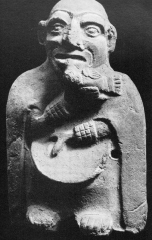 Maya
vessel flute made in a mould
[Ed. Is this an antler or the man's hand?]
|
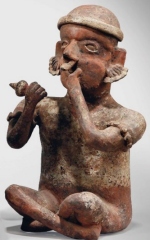
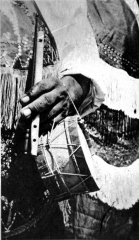
"The man is blowing a bird-shaped vessel placed on his chin. He blows into a hole in the bird's head.
On the musician's lap lies a drum which is struck with a piece of antler. The red deer
and its antlers
were
considered a symbol of the sun and life force."
'Musickgeschichte In Buildrn, Alt Amerika' by Samuel Marti
|
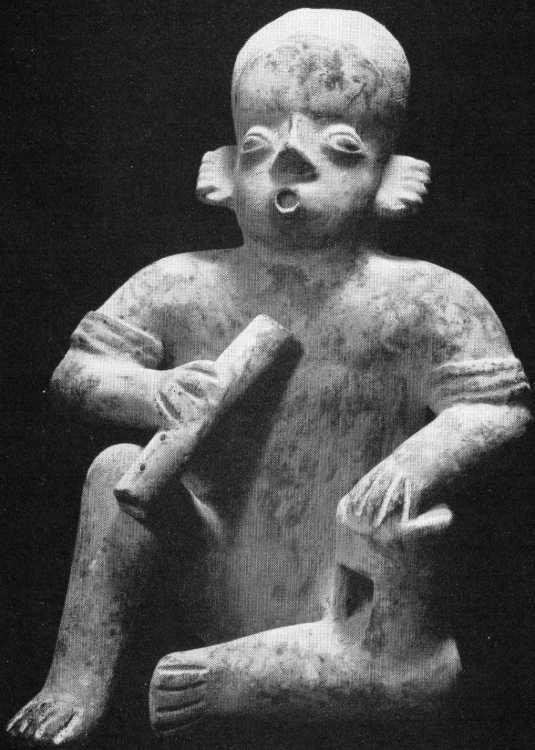 300 - 700 clay figurine
Northwest coast of Mexico |
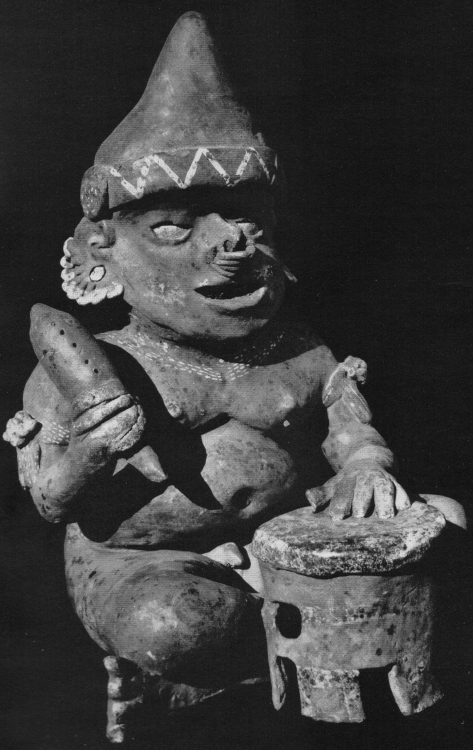 300-1000 painted clay figurine:
rattle, drumstick or pipe?
Northwest coast of Mexico
|
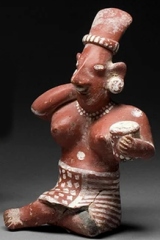 200 BC – 500 AD female player 200 BC – 500 AD female player
Guadalajara, Jalisco |
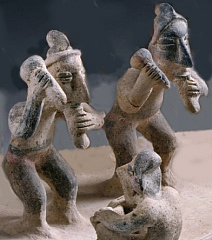 200 BCE - 100 AD Jalisco, West Mexico. 200 BCE - 100 AD Jalisco, West Mexico.
Two of the five pipe and rattle players.
Women stand in a line behind the men
Image courtesy of Princeton University Art Museum |
|
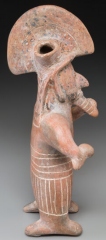 |
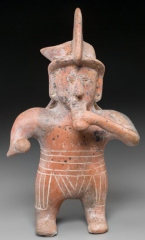
200 BCE-200 AD figure wearing a large crested helmet
with spout of vessel on right side |
|
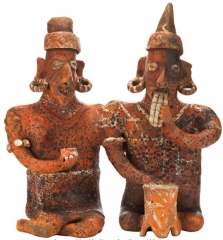 200 BCE - 200 AD panpipes and drum 200 BCE - 200 AD panpipes and drum
Nayarit culture |
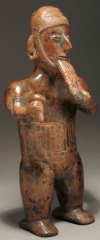 c. 300 - 100 BCE c. 300 - 100 BCE
panpipe with rattle, Colima |
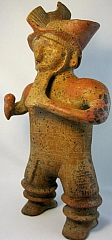 panpipe with rattle, Colima panpipe with rattle, Colima |
|
| see also double pipes and rattle here |
|
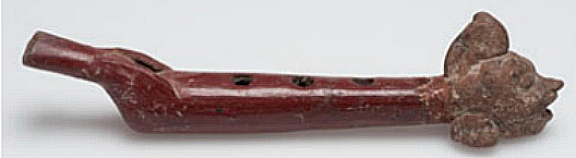
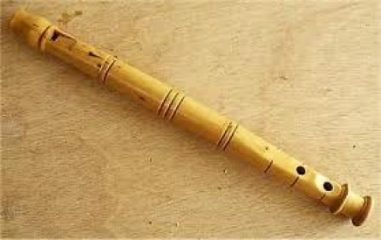
 date unknown - clay 4-hole pipe (duct flute) Colima, back |
In central and west Mexico 1300-1520 AD drumsticks were fashioned from the bones of recently dispatched sacrificial victims
or enemies killed in battle.
'The missing femur at the Mitla Fortress and its implications'
Antiquity / Volume 84 / Issue 326 / December 2010 |
16th century bone flutes were still being made in the Mixteca Alta (northeast Guerrero and western Oaxaca).
These coexisted with those of European tradition
introduced to the New Spain, that they brought
from Mexico in 1552.
‘Music in transformation: musical instruments of the 16th century in the Vocabulary of Juan de Córdova (1578) and its comparison
with that of Francisco de Alvarado (1593)’ by Irene Gomez Fernandez and Gonzalo Sánchez Santiago, 2024, page 24 |
|
pipes found in the emporer's palace 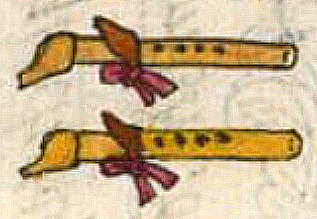 1577 manuscript drawing 1577 manuscript drawing
Florentine Codex. Book 8, page 30 [detail] |
 16th century: broken pipes falling down the steps 16th century: broken pipes falling down the steps
mark
the end of a sacrifice.
Florentine Codex, Page I, F, 6th [detail] |
 1545-1555 1545-1555
created by an indigenous
painter in central Mexico. |
1676 diary of the English explorer William Dampier who wrote of the habits of the local Indians who: ‘Lives and Voyages of Drake, Cavendish and Dampier’ by Johnstone, Christian I, 1831; Dampier Ch VIII |
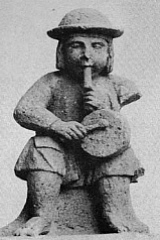 18th century 18th century stone carving,
House of the Marchioness of Uluapa, Mexico City, page 51 |
18th century accounts:
1769 In the Confraternity of San Nicolás Tolentino, amounts paid "to the al tamborilero and clarinet player"
and "to the shawm players" (131r)
1790 amounts disbursed in the Confraternity of San Pedro de la Cañada included payments
to the "tanburileros, piper, shawm player, and clarinet player"
‘Iconographic Sources in the Study of Instrumental Practices in 18th-Century Popular Music in New Spain’ by Evguenia Roubina |
1824
The ’Instrucción provisional of 1824’ reveals the presence of players of the pipe and tabor in infantry companies
in central Mexico. Their pay was very low: "Tambor y pito 10 pesos"
‘Musical Instruments in Mission, Presidio, and Pueblo’ John Koegel Page 4
|
Early 20th century “Towards the end of August…At seven in the morning the men and boys go out
with spades and coas to the milpa
which lies nearly two hours
on foot from the town
. The whole day
they work while the teponaztli [slit drum] throbs through the standing
corn and pipe and tabor shrill
their music to high heaven….
When all had gathered and the teponaztli had been drummed once more
on the base of the cross, we all started back to the village in a straggling,
loose-knit procession to the
bursting of rockets and a gay little tune on the pipe and tabor…”
'Mexican mosaic : folklore and tradition' by Rodney Gallop |
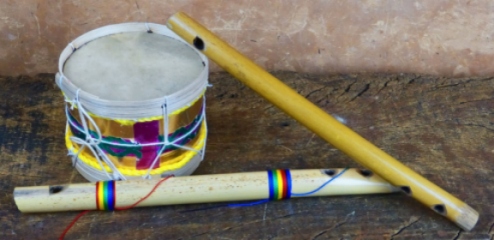 2014 2014 pipes and tabor,
Totonaca (East Mexico) |
|
|
|
“The music of the indigenous people of the southern Mexican State of Chiapas reflects many varied influences, past and present….
The musician may enjoy his work, but always it is an obligation or duty. He is paid in food and drink when performing, otherwise
he must support himself with other work…. The double-skinned drum, 3-hole flute, and all string instruments are all based on
16th century European models as none of them are known to have existed in the Americas before the arrival of the Spaniards.”
“recorded live at actual fiestas in Indian communities, 1972-1974” Tracks on the record include small drum and ‘3-hole flute’
It is not clear whether the ‘flute’ and drum are played together by the same musician.
'THE INDIAN MUSIC OF CHIAPAS, MEXICO VOLUME 2' 1977,
ETHNIC FOLKWAYS RECORDS FE 4379
|
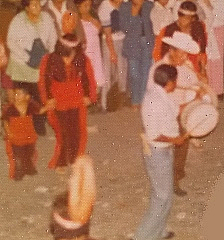 about Dec 1979, Mexico Day of the Indians about Dec 1979, Mexico Day of the Indians |
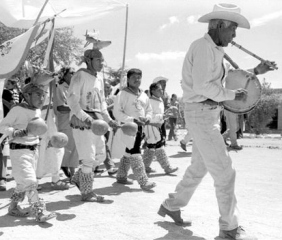
about Dec 1979, Mexico Day of the Indians Outside Basilica in Mexico City. Chris Brady reports:
"They danced to two pipe (3-hole) & tabor players. They were a mixed
gender
team
- men and women dressed alike. They danced in two files -
forward and back
and cross-over. Their costume was tasselled leather
over-shirt, tasselled leather
trousers, sandals with metal plates as soles,
headdress of embroidered head band
with vertical feather at rear. The
'sticks' were two pronged wooden rattles with
tin-lids in between." |
|
 '1972 Folk music instruments'
by Buchner, Alexandre '1972 Folk music instruments'
by Buchner, Alexandre |
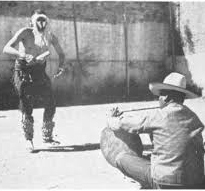
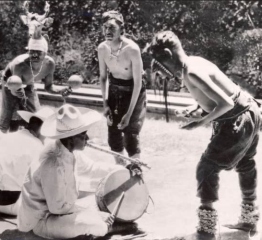 1955 Deer Dance 1955 Deer Dance
|
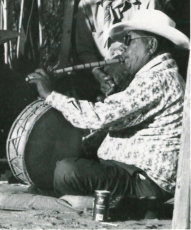 Yacqi musician playing the deer dance Yacqi musician playing the deer dance |
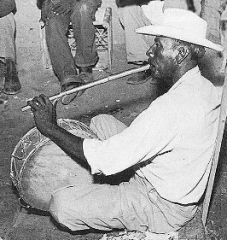 Yacqi musician playing for the deer dance |
|
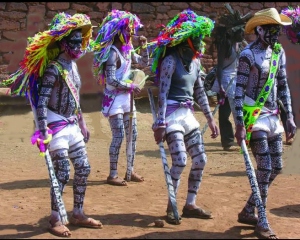
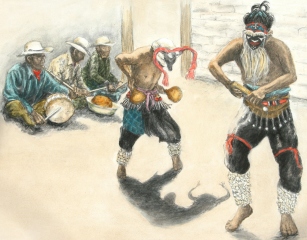 Yacqui Pascola dance Yacqui Pascola dance |
|
“...the music played by a musician called a tampaleo who
simultaneously
plays a flute and a drum. When dancing
to the music of the harp and violin,
the pascola wears his mask
on the side or back of his head, but when
he is
accompanied
by the tampaleo, he wears the mask over his face.”
' The Syncretic Compromise
The Yaqui and Mayo Pascola ' Markman, Roberta H.,
and Peter T. Markman in 'Masks of the Spirit: Image and Metaphor in Mesoamerica' 1989
|
|
|
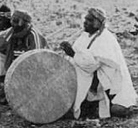 Tarahumara 1998 Tarahumara 1998
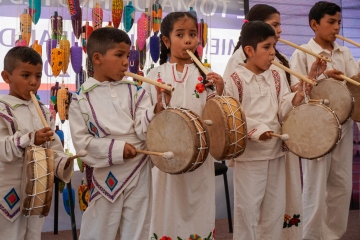
There are three sizes of drum
(tambora) in Tarahumara.
Only
the largest has a skin on both sides. |
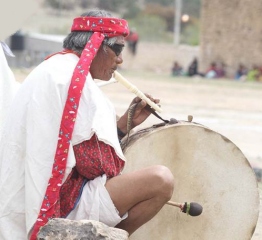 Tarahumara Tarahumara |
|
|
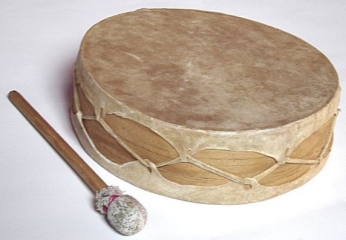 Tarahumara drum Tarahumara drum |
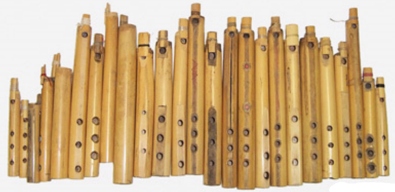 1940's Tarahumara duct flutes at auction 1940's Tarahumara duct flutes at auction |
|
 Tarahumara, NW Mexico, about 1880 Tarahumara, NW Mexico, about 1880 |
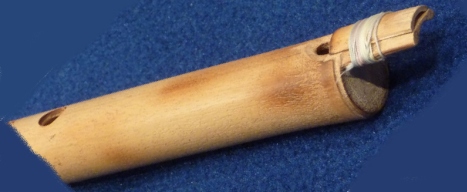 Tarahumara, NW Mexico Tarahumara, NW Mexico |
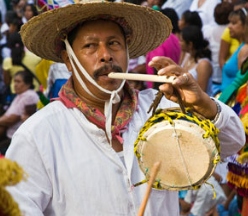 at Independence Day parade |
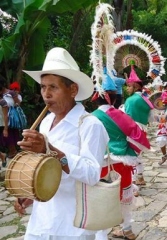 Cuetzalan coffee fair Cuetzalan coffee fair |
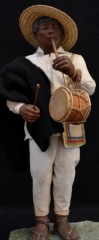 between 1936 and 1950, wax statuette between 1936 and 1950, wax statuette
Nahua-Totonac people of Cuetzalan |
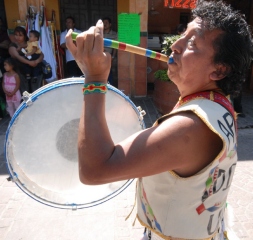 in Tlaquepaque, Jalisco |
|
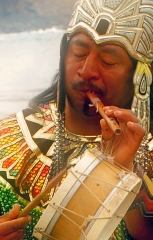 Maya Maya |
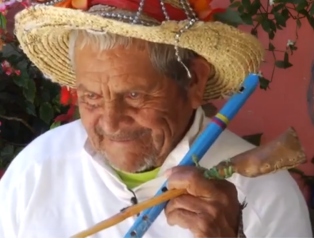
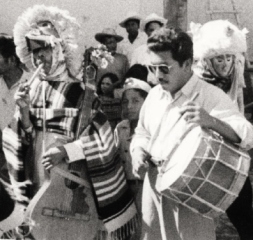 1948 Fiesta Grande, State of Chiapas, playing the Pito |
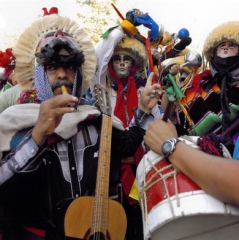 2009 Fiesta Grande, playing the Pito 2009 Fiesta Grande, playing the Pito |
|
 |
2015 playing for dancing at Saint Teresa, Nayarit, Western Mexico |
close-up of musician |
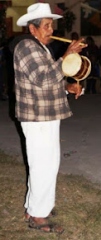 2020 playing for 2020 playing for
Acatlaxquis
dance |
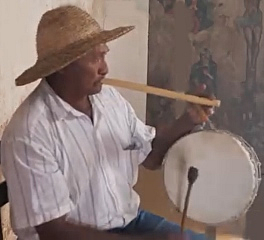 2022 Gabino Roque González 2022 Gabino Roque González |
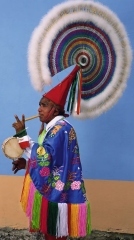
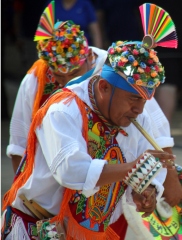
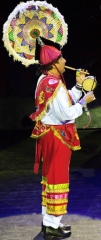
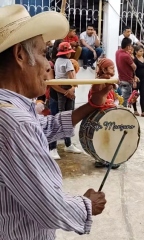 2023 playing for dancers wearing
huge fan-like headdresses 2023 playing for dancers wearing
huge fan-like headdresses |
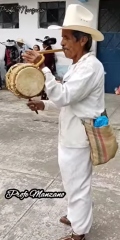 2023 playing for dancers wearing 2023 playing for dancers wearing
huge fan-like headdresses |
|
|
|
|
The Otomíes, also called Otomítes, constitute a linguistic macrofamily that includes several peoples
of pre-Hispanic origin. They inhabit the Central Plateau of Mexico
“the tundos - the drums are about 30 cm in diameter, with a frame and a double head. The frame can be built
with mesquite root wood, because the flexibility of this material allows it to be given the appropriate shape. …
a string passes with a bead that serves as a wound or resonator. It has a handle where it is held with the little
finger of the same hand that holds the flute.”
 Timoteo Alvarez and Basilio Pérez. Timoteo Alvarez and Basilio Pérez.
The two drums are tuned in unison, the same as the flutes. The flutes are played in harmonic intervals,
usually in thirds and fifths. What they call a “second” flute, which goes in an interval lower than the tonic,
serves as a harmonic accompaniment, as well as supporting the melody. |
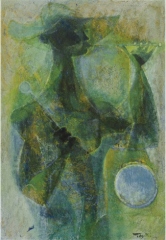
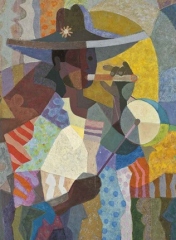
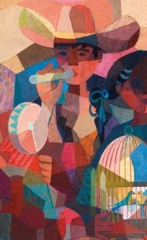
| Paintings by Romeo Tabuena |
|
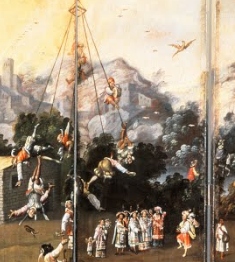
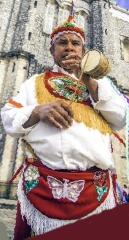
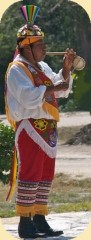
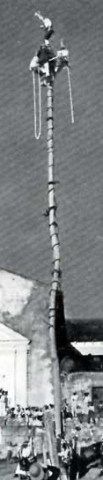
from Veracruz - voladores
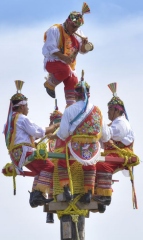
The Danza de los Voladores (Dance of the Flyers), or Palo Volador (Pole Flying), is an ancient Mesoamerican
ceremony/ritual still
performed
today, albeit in modified form, in isolated pockets in Mexico. It is believed to have
originated with the Nahua, Huastec and Otomi peoples in
central Mexico, and then spread throughout most of
Mesoamerica. The ritual consists of dance and the climbing of a 30 meter
pole from
which four of the five
participants then launch themselves tied with ropes to descend to the ground. The fifth remains on top of
the pole,
dancing and playing a flute and drum. According to one myth, the ritual was created to ask the gods to end
a severe drought.
Although the
ritual did not originate with the Totonac people, today it is strongly associated
with them, especially those in and around
Papantla in the
Mexican state of Veracruz. video
|
| |
|
| 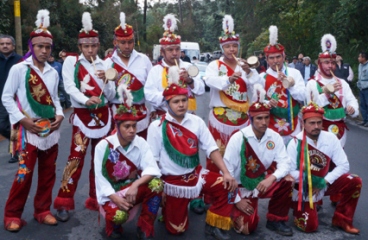 the flying "Caballeros Águila" from Cuetzalan the flying "Caballeros Águila" from Cuetzalan
|
|
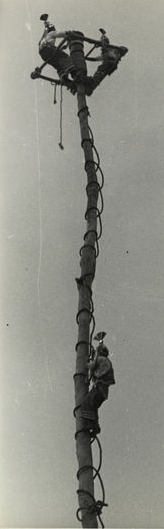 1940-1957 photograph 1940-1957 photograph |
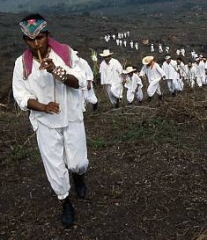 2007 2007 Leading the procession to the mountain
in search of the Tsaqat Kiwi tree. page 20 |
|
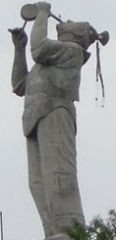 local statue |
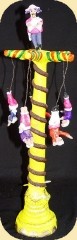 statuette c British Museum |
 2024 2024 linocut (detail) |
|
 1530 Codex Azcatitlan, image 31 1530 Codex Azcatitlan, image 31 |
 |
 coming down
from the top platform |
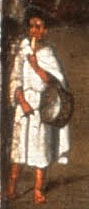 1690 second player 1690 second player
on the ground |
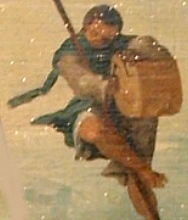
1690 screen
with two players [detail] |
|
|
bell and drum played by a local man  |
after 1529 'General History of the Things of New Spain' by Fray Bernardino de Sahagún:
The Florentine Codex. Book II: The Ceremonies.
Second book, which deals with the calendar,
festivals and ceremonies,
sacrifices, and solemnities
that these natives of this new Spain
performed
in honor of their gods.’ |

|
 |
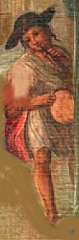 1760 1760 another painted screen |
1730 painting Mexican wedding, playing for dancing man |
|
|
|
| |
|
|
| Pre-Colombian clay 'flutes' here |
| |
|
 15th century Caracas, Venezuela 15th century Caracas, Venezuela |
17th century
“Slaves were worth more if they sang or danced. …. Alfonso González de Nájera described black slaves
as docile
and inclined to singing, to playing instruments such as rattles, pipe and tabor [tamboriles y flautas], and amateurs to the guitar”
‘Music and dance around the Church: Notes for a minimal History of Carora’ by Moisés Orlando Chávez Herrera, 2024, page 51 |
1835 possibly a description of a procession in Caracasa:
“The festivals of the Roman Catholic religion are sufficiently numerous to employ a large portion
of the time
of its votaries; and they are observed with as much pomp in the New World, as in
the Catholic countries
of Europe. Corpus Christi day is celebrated with unusual magnificence….
The most beautiful girls in the city
walk between two rows of priests, some carrying the ark,
and the show-bread, others incense or baskets
of flowers. To these succeed young Indians,
who, to the sound of a flute and tabor, perform wild fantastic
dances.”
‘The History of the Condition of Women: Comprising the women of Europe, America, and South Sea Islands’
by Lydia Maria Child · 1835, page 249 |
|

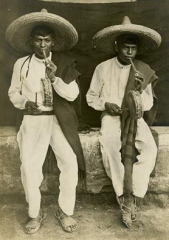 1889-1913
 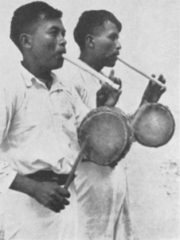 1939 Tuxpan,
  1939
1939 
 1939 [source]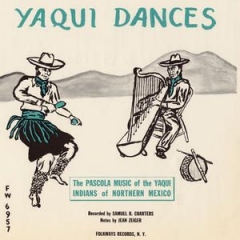

 20th century



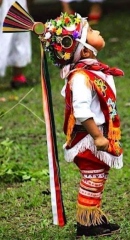 c
c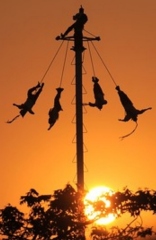
 at top of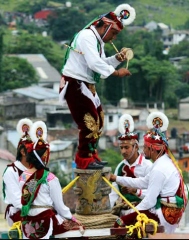
 1964
1964  "the
"the 
 on the
 Yacatan
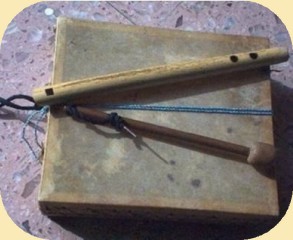
 drumstick
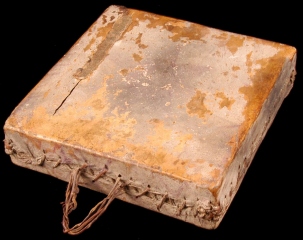 played in the dance of the eagles for the
 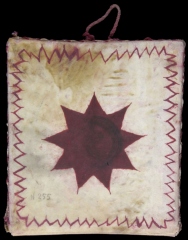 source