Europe: 18th century France
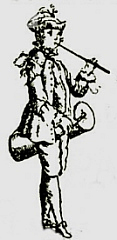
galoubet and tambourin
under construction
French and English court culture were intertwined until 1804 when Napoleon crowned himself. So in the 18th century, when it became fashionable for French aristocrats and the nobility to glorify the 'simple' peasant lifestyle, the vogue also spread to England. Marie Antoinette, Queen of France, lead the way playing at being a rustic peasant dressed in costly clothes. As a result many village and shepherd instruments, including the pipe and tabor, were played and danced to in highly stylised fashion in the most grandiose palaces of France and England.
source wood with ivory
source fruitwood
1760 inn sign [unknown]
"Everything that comes from the flute returns to the drum"
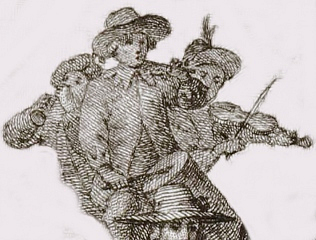
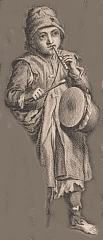
early 18th century street band, engraving
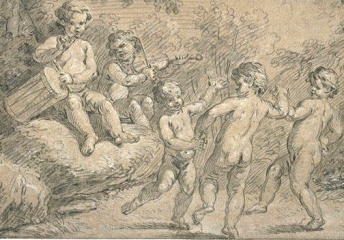
1700-1720 satyrs
1723 wall painting, castle of Voré, Rémalard en Perche, Normandy, [now in the Louvre]
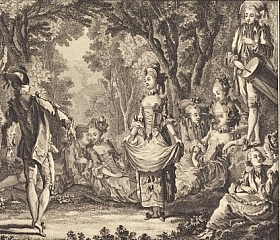
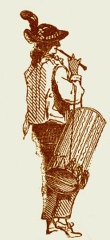
18th century engraving
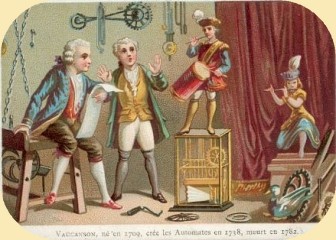
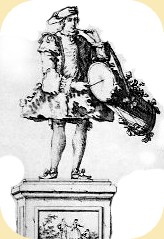
idyllic scene1738 Vaucanson's automata
music book front cover
between 1746 and 1817, sketch
music book front cover
1762-1772 costume
sketch [page 76]18th century painting
1750-1785 wedding procession, engraving, Paris
1780 procession, Perpignon
mask procession, Paris
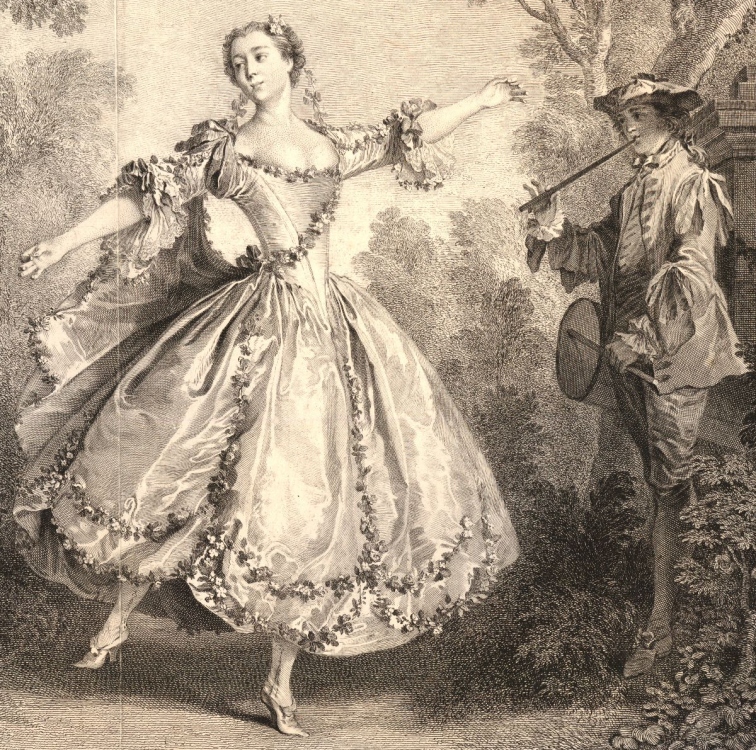
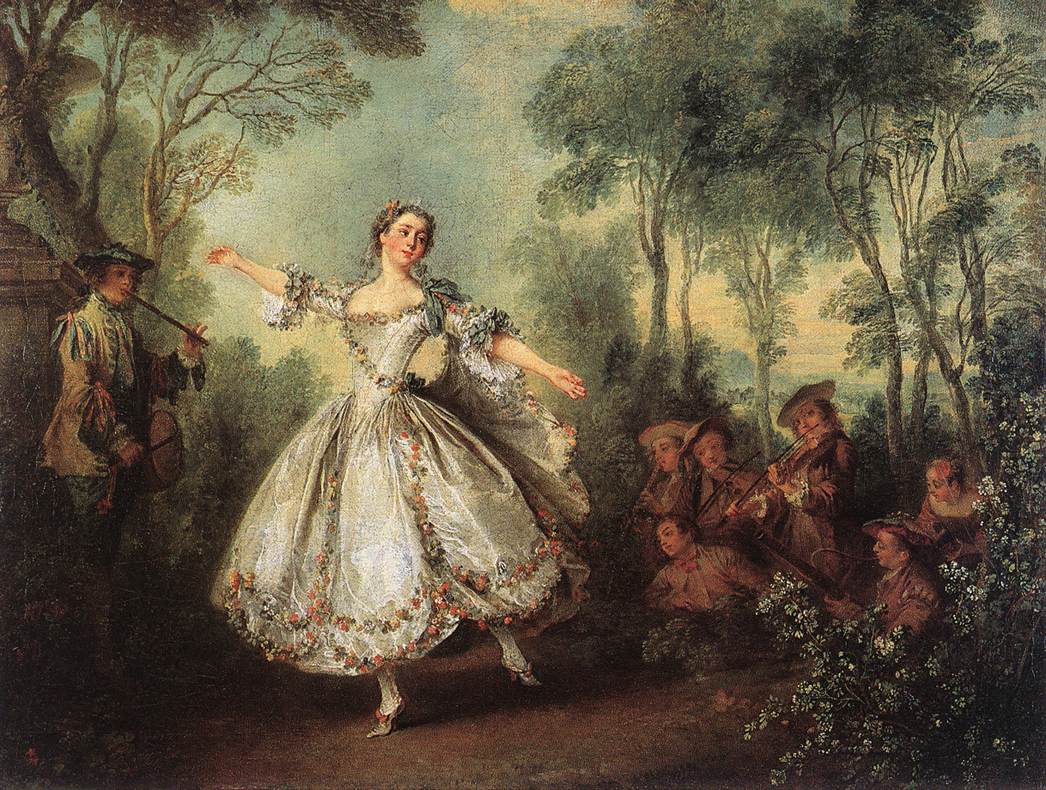
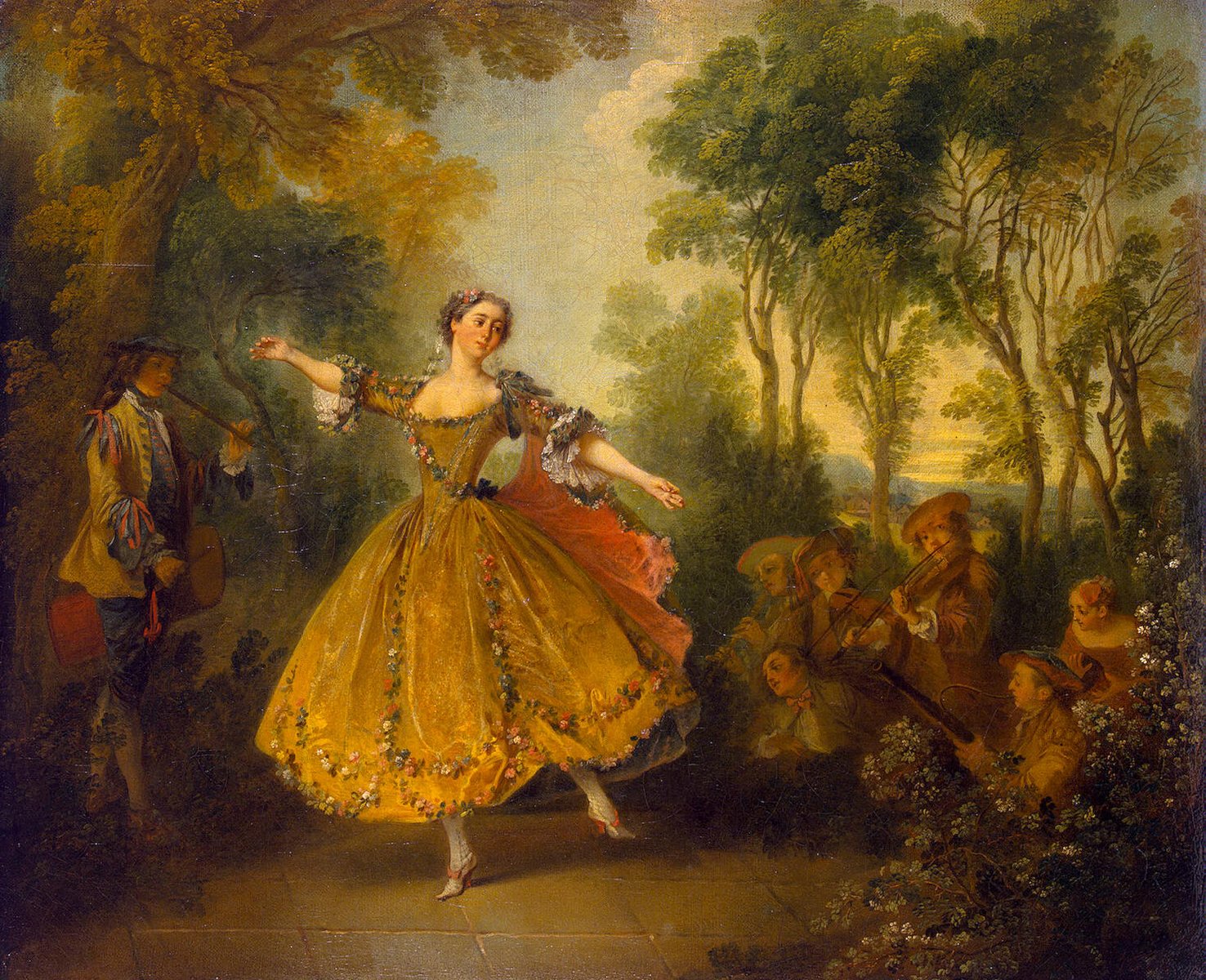
Ballet developed as Court entertainment at this time. So a pipe and tabor player was sometimes depicted
as the accompanist in paintings such as ' La Camargo Dancing' c1730 by Nicholas Lancret (1690-1743),
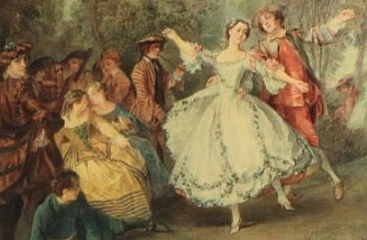
and his similar painting here.Ballet became an essential part of eighteenth-century French opera; the formula required that each act
had to include an elaborate divertissement which included a ballet. Jean-Philippe Rameau (1683–1764)
worked at Court in the 1740's and composed many operas and musical dramas.1732 painting by Lancret, France 'Mlle Camargo Dancing'
another version
player from Hermitage copy
1750 painting by Pesne Marianne Cochois
with male dancer
Victorian copy
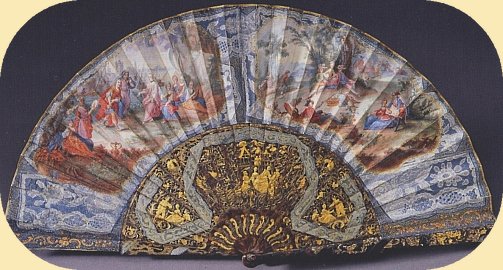
1840-1900 painted paper fan, France
(after Lancret)painted on a fan
1760 Liverpool tile [item 29]
woven tapestry
woven tapestry
1745 orchestra playing for public celebrations of marriages of Monseigneur le Dauphin, City Hall, Paris
1745 player in orchestra
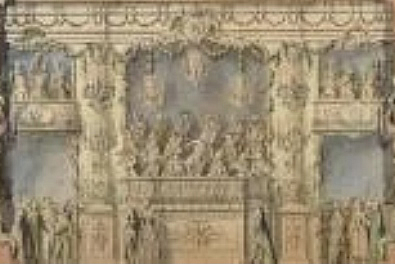
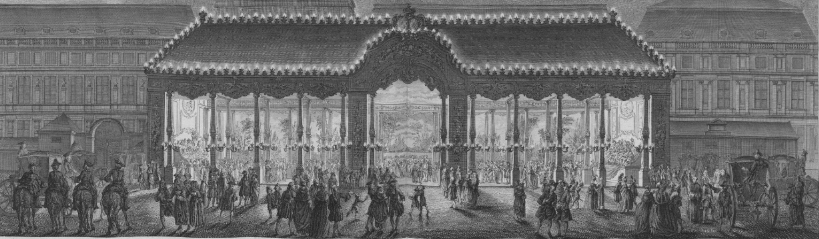
1751 orchestra in the temporary hall constructed on the Place Dauphine for the celebrations of the marriage of Louis Dauphin in 1745
1751 player in orchestra
1769' 'Fashionable Dances
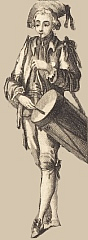
close-up of taborer
(from a different print)
painting ‘The Country Dance and The Tea Party in the Garden’
1774 a high society ball, by Duclos, Paris:
close-up of player
part of an orchestra
Smollet, having visited Nice, wrote in 1766:
"they assemble after service, men and women, in their best apparel, and dance to the musick of fiddles, and pipe and tabor, or rather pipe and drum. There are hucksters' stands, with pedlary ware and knick-knacks for presents."
'Travels Through France and Italy' by Tobias George Smollet (1721-1771, Scottish poet and author.
1745 Fêtes publiques données par la ville de Paris, a l'occasion du mariage de monseigneur le dauphin , in ‘La Salle Du Carousel’
1745 the band
1760 The Saint-Cloud festival
1760 The Saint-Cloud festival: the band playing for dancing [top centre of image]
part of the band
1778 tapestry of a wedding
[dancing to pipe and tabor in left backgroundenlargement of player and dancers
close-uip of galoubet/tambourin player
between 1785 and 1795 man's embroidered waistcoat:
close-up of dancers and taborer
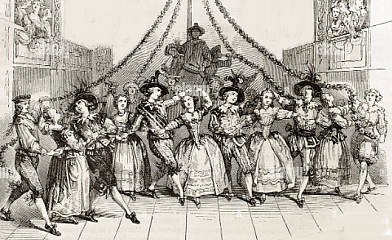
18th century play, dancing the minuet
“If the peasants in the neighbourhood of any chapel dedicated to a saint, whose day is to be celebrated,
have a mind to make a festin, in other words, a fair, they apply to the commandant of Nice for a license,
which costs them about a French crown. This being obtained, they assemble after service, men and women,
in their best apparel, and dance to the musick of fiddles, and pipe and tabor, or rather pipe and drum.c 1766 'Travels Through France And Italy' by Tobias Smollett book 4
1720-1754 etching, Paris
1730 cartouche design (detail)
public dance - the band
1756 dancing in a tavern garden
1756 the band [top right]
1776 after the harvest, painting
1792 fabric depicting the Fall of the Bastille 14th July 1789
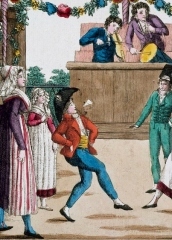
Jouy-en-Josas1790 Pipe and tabor player for two male youth dancers.
Toile, red, on linen: probably a quilt fragment. Record also here
1789 painting of a wedding by Desourtis
close-up of child player
1785 players at 'Village Wedding'
by Descourtis [detail]In 'Dardanus' (1739) Jean-Philippe Rameau wrote character-pieces based on Provençal folk dance
accompanied by pipe and tabor. The bass part simulates a drum by sharply accentuating the rhythm
and by the repetition of a single note, while an upper voice imitates the pipe with a fast-moving melody.
1777 'The Dancers', Corpus Christi ceremonies, Aix
'Explication des cérémonies de la Fête-Dieu d'Aix en Provence' by Gaspard Gregoire
(copyright Musée Granet/CPA. Aix-en-Provence, France. Cliché Bernard Terlay1777 ' Dashing Horses'
1777 'The Dancers'
1777 'The Queen of Sheba'
1763 story:
“…The pipe and tabor here call forth the fawns to dance in woods replete with odors, like those you have
in Provence…”‘Letters from the Marchioness de Sévigné, to her daughter the Countess de Grignan. Translated from the French of the last Paris edition.’
Vol 5 by Sévigné, Marie de Rabutin-Chantal, marquise deThroughout Europe in the 18th century there was also a craze for animated objects. Jacques de Vaucanson
exhibited three mechanical statues, one of which was a galoubet player. These automota were shown four
times daily at the Opera House, Haymarket, in London in 1742. The exhibition leaflet stated:"a life-sized man dressed like a provencal shepherd who could play 20 different tunes on the flute
of Provence (also called a galoubet) with one hand and on the tambourin with the other hand with
all the precision and perfection of a skilful musician".Vaucanson said:
"A curious discovery about the building of this automaton is that the galoubet is one of the most
tiring instrumentsfor the chest because muscles must sometimes make an effort equivalent to 56 pounds"











top of page